2026 Best Three Phase Induction Motor Suppliers?

Time:2026-09-15 Author:Mason
0%

Choosing among the 2026 best Three Phase Induction Motor suppliers requires more than comparing catalog prices. Buyers need evidence of dependable manufacturing, tested performance, and responsive technical support. A motor may look efficient on paper, yet fail to suit a humid workshop, a dusty quarry, or a pump operating continuously.

This guide examines suppliers through practical purchasing criteria. These include IEC compliance, rated efficiency, insulation class, IP protection, vibration control, delivery consistency, and warranty coverage. Attention also goes to real service details, such as available spare bearings, terminal-box quality, and the clarity of installation manuals. For a 400V, 50Hz industrial application, small specification differences can affect starting current, operating temperature, and long-term energy costs. Supplier experience matters here.

No supplier is perfect.

Market reputation alone should not decide a purchase. Independent test documents, factory quality procedures, customer references, and transparent after-sales policies offer stronger evidence. A reliable supplier should explain how its Three Phase Induction Motor performs under load, not only display attractive efficiency figures. It should also identify limitations honestly, including longer lead times for customized shafts, special voltages, or hazardous-area requirements.

The companies discussed in this article are assessed from a buyer’s perspective, combining technical knowledge with practical risk awareness. Rankings may change as production capacity, certifications, service networks, and customer feedback develop. That uncertainty deserves attention. The strongest choice is not always the cheapest or most famous manufacturer. It is the supplier that delivers a properly matched motor, verified documentation, stable quality, and support that remains useful after installation.
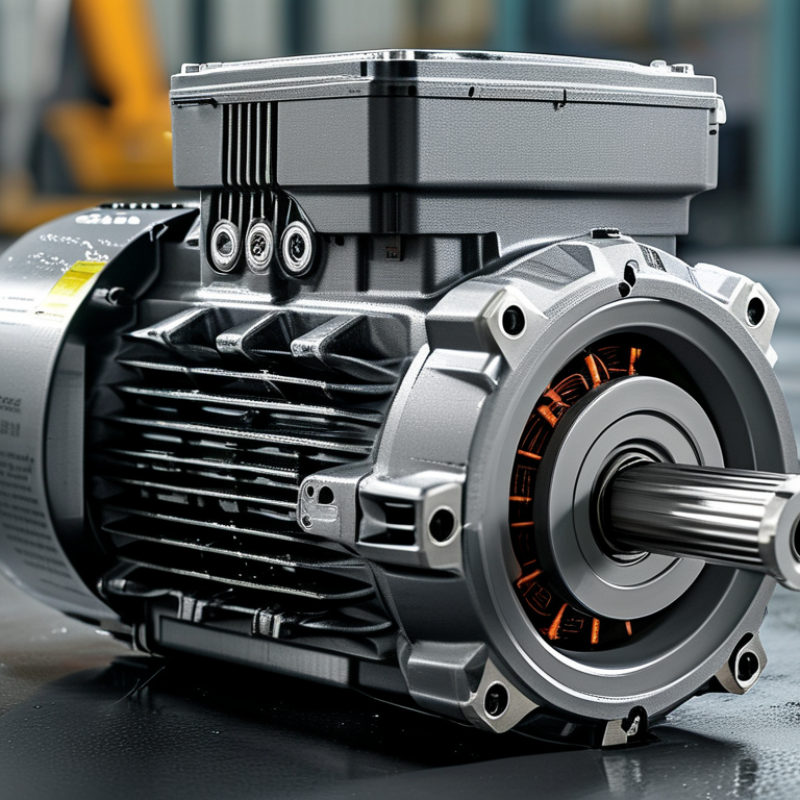
2026 Best Three Phase Induction Motor Suppliers?

What Is a Three-Phase Induction Motor?

A three-phase induction motor converts electrical energy into mechanical rotation through a rotating magnetic field. Its stator contains three windings, positioned 120 electrical degrees apart. When balanced three-phase current enters these windings, the magnetic field rotates smoothly inside the motor.

The rotor follows this field without direct electrical connection. In a squirrel-cage design, conductive bars sit inside a laminated iron core and connect through end rings. The rotating field induces current in these bars. That current creates torque. The rotor must remain slightly slower than the magnetic field. This speed difference is called slip. Without slip, induction stops, and torque disappears.

The design is simple, durable, and suitable for pumps, compressors, conveyors, and fans. International Energy Agency analysis has estimated that electric motor systems consume about 46% of global electricity. Industrial applications represent the largest share. U.S. Department of Energy assessments also identify motor-driven equipment as a major portion of industrial electricity use, though figures vary by sector and measurement method.

A motor’s performance depends on load, voltage balance, cooling, bearings, and operating speed. Efficiency labels alone can mislead. A lightly loaded motor may waste energy despite a high rated efficiency. Field measurements matter. In practice, I have seen installation conditions undermine good specifications. That detail deserves more attention. Power quality, alignment, and maintenance can change temperature, vibration, service life, and actual energy consumption.

How to Evaluate Three-Phase Motor Suppliers in 2026

How to Evaluate Three-Phase Motor Suppliers in 2026

Evaluating three-phase induction motor suppliers requires more than comparing catalog prices. Request complete nameplate data, efficiency curves, insulation class, IP rating, and permissible temperature rise. Check whether the motor suits your actual load profile, starting method, ambient temperature, and variable-frequency drive. Small mismatches can cause overheating, vibration, or unnecessary energy consumption. Proof matters.

A credible supplier should provide routine test records and traceable quality procedures. Ask for evidence of winding resistance, vibration limits, noise levels, and balance testing. Confirm that manufacturing follows recognized international standards and local electrical requirements. Review bearing specifications, enclosure materials, shaft tolerances, and paint protection for harsh environments. A polished brochure is not technical evidence.

Service capability deserves equal attention. Examine warranty terms, spare-part availability, response times, installation guidance, and technician qualifications. Suppliers should explain how they handle failures, not only how they prevent them. Compare delivery reliability using recent project references, not promises. Digital monitoring options may improve maintenance, but they can also add complexity and cost. No scorecard is perfect. I would leave room for a site visit, because factory claims can feel different beside a noisy test bench. Evaluate lifecycle cost, too, including electricity, downtime, repairs, and disposal. The cheapest quotation may become the most expensive decision.

Leading Three-Phase Induction Motor Suppliers for Different Applications

2026 Best Three Phase Induction Motor Suppliers?

Choosing a three-phase induction motor supplier depends on the application, not only the purchase price. Pumps often need stable torque, corrosion protection, and reliable operation under changing loads. Conveyor systems require strong starting performance and frequent cycling. Compressors may demand high efficiency, precise cooling, and continuous-duty construction.

Experienced suppliers should provide clear motor curves, efficiency data, insulation ratings, and protection classifications. Ask for test records, dimensional drawings, vibration limits, and documented quality procedures. These details make comparison easier. They also reduce installation surprises. A supplier serving factories should understand variable frequency drives, soft starters, and mechanical alignment. Agricultural users may need sealed housings and practical repair support.

Service capability matters after delivery. Check spare-part availability, response times, warranty terms, and technician training. Regional support can be more useful than a lower initial quotation. During site evaluations, reliable suppliers usually ask about ambient temperature, altitude, duty cycle, voltage variation, and starting conditions. That behavior shows technical responsibility.

No supplier fits every project perfectly. Sometimes, published efficiency figures do not reflect dusty workshops or unstable power supplies. I have seen selection decisions focus too heavily on catalog ratings. That can create overheating, noise, or unexpected maintenance. A careful supplier should admit these risks and recommend field testing when necessary. For critical applications, request a sample inspection, factory acceptance test, and written performance criteria before production begins.

Key Motor Specifications, Certifications, and Service Factors

2026 Best Three Phase Induction Motor Suppliers?

Selecting a supplier requires more than comparing purchase prices. The International Energy Agency’s 2024 Energy Efficiency report estimates that motor-driven systems consume roughly half of global electricity. Efficiency therefore affects operating cost, heat, and emissions. Ask suppliers for verified efficiency maps, not only IE3 or IE4 labels. Check rated output, voltage, frequency, full-load current, starting torque, slip, noise, and enclosure protection. A 30 kW motor with poor load matching can waste more energy than its catalogue suggests.

Certification details also matter. IEC 60034-1 defines key rating and performance requirements, while IEC 60034-30-1 establishes efficiency classes for line-operated motors. For North American projects, confirm applicable electrical safety and construction requirements through recognized certification documentation. Service factor needs careful review. A 1.15 service factor is not permission for continuous overload. Ambient temperature, altitude, voltage imbalance, and frequent starts can reduce the available margin. The U.S. Department of Energy’s motor-system guidance repeatedly emphasizes proper sizing and system-level assessment. That point is easy to ignore.

Tips: Request a routine test report, efficiency test method, bearing design, warranty terms, spare-parts lead time, and local service coverage. Measure shaft load before ordering. Do not rely on nameplate current alone. In field projects, installation quality often decides reliability; alignment, lubrication, and cooling deserve written procedures. One imperfect assumption remains common: an IE4 motor is not automatically the best choice if the drive cycle, controls, or repair network is unsuitable. Judge the complete operating system.

2026 Best Three Phase Induction Motor Suppliers? - Key Motor Specifications, Certifications, and Service Factors

Evaluation Dimension Typical Industrial Requirement or Target Relevant Standard or Certification Supplier Verification Point
Motor Type Three-phase squirrel-cage induction motor for continuous industrial operation IEC 60034 series; NEMA MG 1 where applicable Confirm the motor is suitable for the driven load, starting method, and operating environment.
Rated Output Approximately 0.12 kW to 1,000 kW for common low-voltage industrial applications IEC 60034-1; standardized output series may vary by frame size Request the rated power, rated speed, torque curve, and overload capability for each duty point.
Rated Voltage Common low-voltage ratings include 230/400 V at 50 Hz and 460 V at 60 Hz; project-specific voltages are also available IEC 60034-1; NEMA MG 1 for North American applications Verify voltage tolerance, connection method, phase sequence, and compatibility with the local power system.
Rated Frequency 50 Hz or 60 Hz; inverter-fed motors may support a defined variable-frequency range IEC 60034-1; IEC 60034-25 for converter-fed applications Check base frequency, permissible speed range, cooling performance, and insulation stress under PWM operation.
Efficiency Class IE3 High Efficiency is widely used; IE4 Super Premium Efficiency is available for selected ratings and designs IEC 60034-30-1 Request tested efficiency at 50%, 75%, and 100% load, plus the applicable efficiency-class certificate.
Power Factor Typically approximately 0.70 to 0.95 at rated load, depending on motor size, speed, and design IEC 60034-2-1 test methods Compare full-load and partial-load power factor to estimate reactive-power requirements.
Enclosure Protection IP55 is common for general industrial use; higher protection may be required for washdown, dust, or outdoor service IEC 60034-5 Confirm the IP rating applies to the complete motor assembly and matches the actual installation conditions.
Cooling Method IC411 totally enclosed fan-cooled construction is common for standard low-voltage motors IEC 60034-6 Check cooling-air clearance, fan material, noise level, and derating at low speed or high ambient temperature.
Insulation System Class F insulation is common; Class H may be selected for higher thermal stress or special applications IEC 60085; IEC 60034-18 series For variable-speed drives, request inverter-duty insulation, surge protection, and bearing-current mitigation details.
Temperature Rise Class B temperature rise within a Class F insulation system is a common conservative design target IEC 60034-1 Verify the temperature-rise limit, measurement method, ambient reference, and altitude assumptions.
Duty Rating S1 continuous duty is standard for loads operating at a constant or nearly constant load IEC 60034-1 Use S2–S10 duty classifications when the application includes cycling, braking, frequent starts, or intermittent loading.
Service Factor A 1.15 service factor is common in NEMA-rated motors; IEC motors should be evaluated using rated duty and overload data rather than assuming the same factor NEMA MG 1; IEC 60034-1 Confirm whether the service factor is continuous, temperature-limited, and valid for the specified voltage, frequency, and altitude.
Starting Performance Starting current, locked-rotor torque, breakdown torque, and acceleration time must match the driven equipment IEC 60034-12; NEMA MG 1 where applicable Request the complete starting-current and torque data, especially for high-inertia loads and weak electrical networks.
Mounting and Frame Common arrangements include foot-mounted, flange-mounted, and combined foot-and-flange designs IEC 60072; IEC 60034-7 Verify frame dimensions, shaft height, shaft extension, flange size, tolerances, and interchangeability.
Operating Environment Standard reference conditions are commonly 40°C ambient temperature and up to 1,000 m altitude unless otherwise specified IEC 60034-1 Obtain derating curves for high altitude, high ambient temperature, corrosive atmospheres, and restricted ventilation.
Noise and Vibration Noise and vibration limits depend on motor size, speed, mounting, and application requirements IEC 60034-9; IEC 60034-14 Request guaranteed sound-pressure data, vibration grade, balancing method, and test conditions.
Bearings and Lubrication Sealed or regreasable rolling-element bearings are commonly used; bearing selection depends on speed and radial or axial load Manufacturer design documentation; ISO 281 may be used for bearing-life calculations Check calculated bearing life, grease type, relubrication interval, shaft-grounding provisions, and spare-parts availability.
Routine and Type Testing Routine tests normally include winding resistance, insulation resistance, no-load performance, and high-voltage withstand testing IEC 60034-1; IEC 60034-2-1 Require signed test reports, calibration records, and clearly defined acceptance criteria before shipment.
Safety and Market Compliance Compliance depends on the destination market, motor construction, hazardous-area classification, and installation CE marking where applicable; UKCA where applicable; UL or CSA certification where required; ATEX or IECEx for applicable hazardous areas Verify the certificate scope, model range, voltage range, hazardous-area category, and validity with the issuing body.
Energy-Regulation Readiness Select the efficiency class required by the installation country and application-specific legislation IEC 60034-30-1; applicable regional ecodesign or minimum-efficiency regulations Request the latest efficiency declaration and confirm that the exact rated output and pole number are covered.
Customization Capability Options may include brakes, encoders, thermistors, space heaters, special shafts, stainless-steel hardware, and forced ventilation Project specification and applicable IEC or NEMA requirements Assess engineering lead time, design-change control, drawing approval, and documentation quality.
After-Sales Service Recommended services include commissioning support, troubleshooting, spare-parts supply, repair guidance, and field inspection Service-level agreement defined by the purchaser and supplier Evaluate response time, local technical coverage, spare-parts availability, warranty terms, and repair turnaround.
Documentation Package Datasheet, dimensional drawing, wiring diagram, efficiency data, test report, maintenance manual, and compliance documents Contract and project documentation requirements Make document completeness and revision control part of the supplier scorecard.

How to Select the Right Supplier for Your Operating Requirements

2026 Best Three Phase Induction Motor Suppliers?

Selecting the right supplier starts with your operating requirements, not a supplier’s catalog. Record voltage, frequency, load profile, starting torque, duty cycle, ambient temperature, and installation altitude. A motor running beside dust, moisture, or frequent washdowns may need a different enclosure and insulation system. Small details matter.

Ask suppliers for tested efficiency data, temperature-rise results, dimensional drawings, and protection ratings. Confirm that their certificates match your market and equipment standards. Request references from facilities with similar loads, not merely attractive case studies. A reliable supplier should explain bearing life, lubrication intervals, spare-part availability, and expected delivery times clearly.

Do not compare prices alone. A lower quote may hide weaker service or unsuitable starting performance. I have seen teams choose a motor correctly on paper, then struggle because the supplier ignored repeated starts. That mistake is expensive. Ask how the supplier handles custom shafts, replacement units, warranty claims, and field failures. Check response times in writing.

Leave room for doubt. Your initial load estimate may be wrong. Measure actual current and starting behavior when possible. A short technical call with the supplier’s engineer can reveal gaps that sales material misses. The best supplier is not always the largest; it is the one that understands your operating conditions and documents its promises.

2026 Best Three-Phase Induction Motor Suppliers? How to Select the Right Supplier for Your Operating Requirements

Recommended procurement weighting for evaluating suppliers of industrial three-phase induction motors. The weighting prioritizes efficiency, reliability, electrical compatibility, environmental protection, and lifecycle support.

Use these criteria with your actual operating conditions, including motor power rating, duty cycle, voltage and frequency, ambient temperature, enclosure requirements, efficiency targets, spare-parts availability, and total cost of ownership. The percentages are planning weights rather than rankings of specific companies or brands.

FAQS

What technical data should I request from a three-phase motor supplier?

Request nameplate data, efficiency curves, insulation class, IP rating, temperature rise, noise limits, and vibration results. Proof matters.

How can I judge whether a motor suits my application?

Compare rated power with actual load, starting torque, duty cycle, voltage, frequency, altitude, and ambient temperature. A 30 kW motor may waste energy when poorly matched.

Are efficiency labels enough when comparing motors?

No. Ask for verified efficiency maps and testing methods, not only efficiency-class labels. The operating cycle matters more than a neat label.

What quality evidence should a supplier provide?

Request routine test reports covering winding resistance, balance, vibration, noise, and temperature rise. A polished brochure is not technical evidence.

Which environmental details affect motor selection?

Dust, moisture, washdowns, heat, and high altitude can affect enclosure, insulation, cooling, and bearing life. Wet floors change the decision.

How should I evaluate supplier service capability?

Check warranty terms, spare-part lead times, technician qualifications, installation guidance, and written response times. Ask about failures, not only prevention.

Why should I inspect installation procedures before ordering?

Poor alignment, weak lubrication practices, or blocked cooling can damage a suitable motor. The motor is not the whole system.

Is the cheapest quotation usually the best choice?

Not always. Include electricity, downtime, repairs, spare parts, delivery delays, and disposal in lifecycle cost. Cheap today, expensive later.

Should I trust the supplier’s initial load estimate?

Treat it as provisional. Measure shaft load, current, and starting behavior when possible. My first estimate could be wrong.

What should I check when a motor uses a variable-frequency drive?

Confirm compatibility, insulation requirements, cooling performance, operating speed range, and bearing protection. A high-efficiency motor can still be unsuitable.

Conclusion

This guide explains what a Three Phase Induction Motor is, how it converts three-phase electrical power into reliable mechanical energy, and why it is widely used in industrial, commercial, and infrastructure applications. It presents a practical framework for evaluating suppliers in 2026, focusing on engineering capability, product consistency, customization, delivery reliability, technical support, warranty terms, and long-term service capacity.

The article also compares supplier suitability for applications such as pumps, fans, compressors, conveyors, and heavy-duty machinery without promoting any specific brand. It highlights essential specifications, including power rating, voltage, frequency, speed, efficiency, enclosure protection, insulation class, cooling method, starting performance, certifications, and service factors. Finally, it helps buyers match a supplier’s products and support capabilities with their operating environment, load profile, maintenance strategy, energy targets, budget, and regulatory requirements, enabling a more informed and dependable purchasing decision.


Mason

Mason

Mason is a seasoned marketing professional with a deep expertise in the company's offerings and a passion for driving brand awareness. With a strong background in digital marketing strategies, he has an innate ability to connect with diverse audiences and effectively communicate product benefits.......