China Top 10 Permanent Magnet Synchronous Motor Suppliers?

Time:2026-09-30 Author:Charlotte
0%

Choosing a supplier from China’s many motor manufacturers takes more than comparing prices. A Permanent Magnet Synchronous Motor can offer precise speed control, strong efficiency, and compact performance, but results depend on the application and system design. A motor selected for a packaging line may not suit a pump, an electric vehicle, or a high-speed spindle. The details matter.

This guide introduces ten Chinese suppliers for buyers seeking motors and related drive solutions. It is a starting point, not a universal ranking or endorsement. Compare each company’s product range, manufacturing capabilities, export experience, and technical support. Ask for rated power, torque-speed curves, insulation class, cooling method, encoder options, and mounting dimensions. Check whether the specifications match your operating conditions, including duty cycle, ambient temperature, and inverter setup. Small mismatches can become costly.

Look beyond polished brochures. Request current datasheets, relevant quality documentation, sample terms, warranty details, and customer references where available. Confirm lead times and spare-parts support in writing. A supplier may be a strong fit for standard equipment yet less prepared for custom shafts or demanding control requirements. That distinction is easy to miss. Public information can also be incomplete or outdated, so verify key claims directly before making a purchase decision. The profiles that follow are intended to help narrow your shortlist and guide practical questions—not replace engineering review or supplier due diligence.
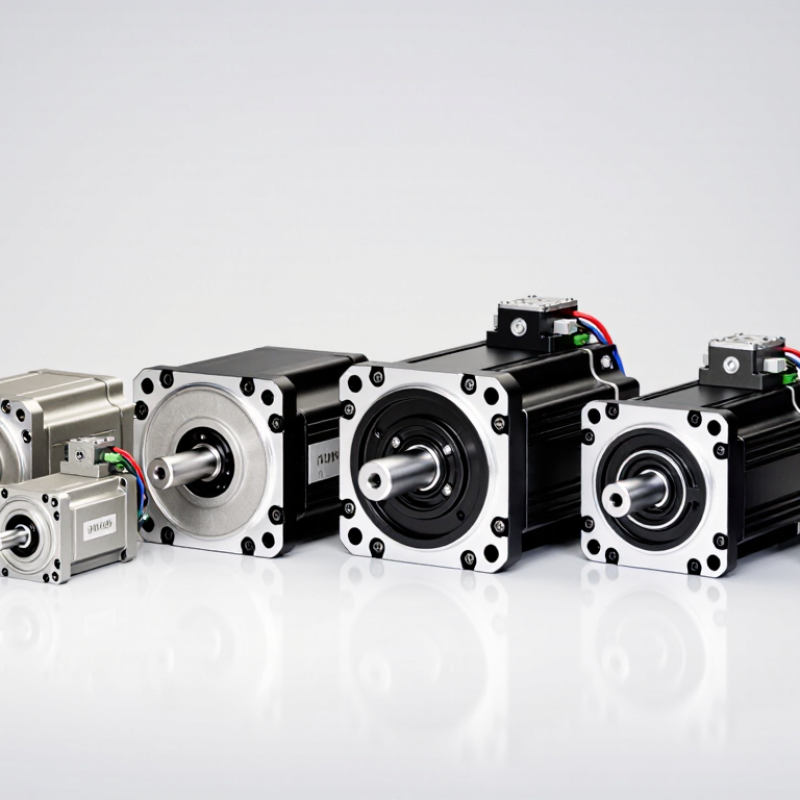
China Top 10 Permanent Magnet Synchronous Motor Suppliers?

What Is a Permanent Magnet Synchronous Motor?

What Is a Permanent Magnet Synchronous Motor?

A permanent magnet synchronous motor, or PMSM, uses permanent magnets in its rotor to create a steady magnetic field. The stator produces a rotating magnetic field through controlled electrical current. These fields rotate together at the same speed. There is no normal slip between them. This design can deliver smooth torque, accurate speed control, and strong efficiency across many operating conditions. Its compact structure also suits electric vehicles, industrial pumps, robotics, and precision machinery.

In practical equipment, a motor controller adjusts current frequency and voltage to match the required load. This helps the motor respond quickly when a conveyor accelerates or a pump changes pressure. Engineers should still check cooling, insulation, bearing life, and controller compatibility. High efficiency on a datasheet does not guarantee equal results in a dusty factory. I have seen performance estimates change after temperature, duty cycle, and installation space were reviewed. PMSMs are powerful, but they are not a perfect choice for every application.

Tips: Confirm the rated torque at your real operating speed. Check peak load, not only continuous load. Review the motor’s cooling method and encoder requirements. Ask for test data under comparable conditions. Small details matter.

Key Factors for Evaluating Chinese PMSM Suppliers

Evaluating Chinese permanent magnet synchronous motor suppliers requires more than comparing catalog prices. Check whether the supplier designs motors for your actual load, speed range, voltage, and duty cycle. Ask for winding data, magnet grades, insulation classes, efficiency curves, and thermal limits. A credible engineering team should explain test conditions clearly, not only present attractive figures.

Request samples from the same production line used for volume orders. Measure vibration, noise, temperature rise, starting torque, and efficiency under realistic loads. Review calibration records for dynamometers and temperature sensors. Factory audits should also examine traceability, incoming magnet inspection, rotor balancing, and final electrical testing. Certificates help, but they do not replace evidence.

Supply reliability deserves equal attention. Study production capacity, lead times, spare-part support, change-control procedures, and export documentation. Ask how the supplier handles rejected batches and field failures. Their response may reveal more than a sales presentation. No scorecard is perfect. A low-cost motor can become expensive after repeated failures, while a polished factory may still lack application experience. Independent testing is worth considering for critical projects. Keep written records, challenge unclear claims, and compare suppliers using the same technical requirements.

China Top 10 Permanent Magnet Synchronous Motor Suppliers: Key Evaluation Factors

This chart presents an illustrative procurement weighting framework for comparing Chinese PMSM suppliers without displaying company or brand data. Efficiency, reliability, customization capability, and total cost are commonly reviewed together when selecting a motor supplier. The percentages are evaluation weights rather than supplier rankings or published market statistics.

China’s Top 10 Permanent Magnet Synchronous Motor Suppliers

China’s Top 10 Permanent Magnet Synchronous Motor Suppliers should be assessed through evidence, not visibility alone. The International Energy Agency reports that electric motor systems consume about 53% of global electricity. Efficiency, therefore, matters beyond vehicle performance. A credible supplier should disclose motor efficiency maps, torque density, thermal limits, and batch-testing methods.

China’s industrial base offers strong manufacturing depth. According to the China Association of Automobile Manufacturers, China produced more than 30 million vehicles in 2023, including over 9 million new-energy vehicles. This scale supports faster supplier learning and broader testing experience. However, production volume does not prove durability. Buyers should examine rotor balance, magnet retention, insulation quality, noise levels, and operation above 10,000 revolutions per minute.

Public data remains uneven. That is a problem. Some suppliers publish laboratory figures but provide limited field-service records. My evaluation may also overvalue efficiency and undervalue repair access. The U.S. Department of Energy notes that motor efficiency depends on the complete drive system, not only the motor. For China’s top ten suppliers, a stronger comparison should include independent certification, three-year failure data, controller compatibility, delivery consistency, and documented performance in humid or high-temperature environments. Cost deserves attention, but a low quotation can hide stricter maintenance demands. Fitness for application should decide the ranking.

China’s Top 10 Permanent Magnet Synchronous Motor Suppliers

Brand-free supplier evaluation checklist. The entries below describe technical factors and standards to verify; they are not a verified ranking of individual companies.

No. Evaluation Dimension Relevant Fact What to Verify with a Supplier Useful Reference
1 Rated power and torque range Motor output, torque, speed, and duty rating depend on the motor’s design and operating conditions; they should be assessed against the intended application. Request rated and peak torque, rated speed, overload capability, duty cycle, and performance curves for the proposed model. IEC 60034-1, rotating electrical machines: rating and performance
2 Speed and pole configuration For a synchronous motor, synchronous speed is determined by supply frequency and pole count: ns = 120f/P, where speed is in rpm. Confirm the pole count, required operating-speed range, drive frequency range, and whether field-weakening operation is supported. Motor nameplate data and manufacturer speed–torque curves
3 Efficiency and test method Efficiency should be compared at stated load and speed points using a documented test method; results from different conditions may not be directly comparable. Ask for test reports that state the test method, operating point, measurement uncertainty, and whether the figures apply to the motor alone or the motor-drive system. IEC 60034-2-1, methods for determining losses and efficiency
4 Drive and inverter compatibility Permanent magnet synchronous motors are commonly operated with electronic drives; control method and motor parameters affect usable performance. Confirm supported drive types, voltage and current limits, control mode, parameter files, and commissioning support. Motor and drive technical documentation
5 Position and speed feedback Depending on the control system, a motor may use feedback devices such as an encoder or resolver, or operate with a sensorless control method. Check feedback-device options, resolution or accuracy, electrical interface, cabling, and compatibility with the selected drive. Motor feedback-device and drive-interface specifications
6 Cooling method and thermal limits Cooling arrangements can include natural or forced air cooling and liquid cooling. The applicable method affects thermal performance and installation requirements. Verify cooling method, coolant or airflow requirements, ambient-temperature limits, thermal sensors, and derating conditions. IEC 60034-6, methods of cooling for rotating electrical machines
7 Ingress protection An IP code classifies protection against access to hazardous parts, solid objects, and water under specified test conditions; it does not describe every environmental capability. Confirm the exact IP rating of the delivered motor configuration and whether connectors, shaft seals, or cooling accessories affect it. IEC 60529, degrees of protection provided by enclosures
8 Insulation and winding temperature Insulation systems are assigned thermal classes. The appropriate operating limit depends on the complete motor design and specified operating conditions. Request the insulation-system class, winding-temperature limits, sensor options, and stated ambient and altitude conditions. IEC 60085, electrical insulation: thermal evaluation and designation
9 Mechanical fit and mounting Frame, mounting arrangement, shaft dimensions, and allowable mechanical loads must match the driven equipment and installation. Check dimensioned drawings, shaft and flange tolerances, keyway details, bearing arrangement, and permitted radial and axial loads. Motor outline drawings and applicable IEC or customer interface requirements
10 Quality records and traceability Documented inspection and testing help establish that the supplied motor meets its agreed specification; the scope of evidence should be defined in the purchase contract. Agree on routine-test records, serial-number traceability, acceptance criteria, warranty terms, and the process for handling nonconforming products. Purchase specification, inspection plan, and agreed acceptance-test requirements

Product Categories and Industry Applications

China’s top ten permanent magnet synchronous motor suppliers usually serve several product categories, not one narrow market. Common offerings include low-voltage motors, high-voltage units, servo motors, spindle motors, gearless elevator motors, and integrated drive systems. Each category has different cooling, control, torque, and installation requirements. Buyers should examine rated speed, peak torque, insulation class, encoder compatibility, and expected duty cycle. A polished catalog is not enough.

Industrial pumps and fans often use high-efficiency motors for continuous operation. Machine tools need precise spindle control, rapid acceleration, and low vibration. Automated production lines rely on servo motors for positioning accuracy and repeated motion. Elevator systems require strong starting torque, quiet operation, and dependable braking coordination. Electric buses, rail equipment, and material-handling systems may require liquid cooling and strict thermal monitoring. The application changes the correct motor more than the supplier ranking.

Practical evaluation should include sample testing, vibration readings, temperature rise, efficiency data, and controller matching. Ask for test methods, not only laboratory numbers. Delivery support matters when a production line stops. Some suppliers provide customization, but customization can increase lead time and maintenance complexity. That trade-off is easy to underestimate. A smaller motor may reduce energy use, yet poor overload planning can shorten its service life. Supplier selection remains partly technical judgment, and even experienced buyers can miss hidden integration costs.

How to Choose the Right Chinese PMSM Supplier

Choosing among Chinese permanent magnet synchronous motor suppliers is less about a polished catalog than matching the motor to its duty cycle. Check rated and peak torque, speed range, cooling method, insulation class, and efficiency maps at the operating points your machine actually uses. Ask for test reports at your voltage and load, not just headline efficiency. A motor that runs quietly on a showroom bench may overheat inside a dusty, enclosed cabinet. Small detail. Request rotor-balance records, vibration data, bearing-life assumptions, and sample consistency; one prototype proves little.

The supply chain matters too. The IEA’s Global Critical Minerals Outlook 2024 estimates that China accounts for about 90% of rare-earth separation and refining, and 94% of sintered permanent-magnet production. That concentration supports scale, but makes traceability and contingency planning worth checking. The IEA’s Global EV Outlook 2025 reports that electric-car sales topped 17 million in 2024, exceeding one in five new-car sales. This signals growing demand across motor supply chains. Ask suppliers for capacity figures, lead-time history, magnet sourcing details, and written change-control procedures. Verify certificates with the issuing laboratory, inspect a production sample, and compare warranty exclusions line by line. A tidy ranking helps, but it cannot replace an audit. Supplier data may be incomplete; buyers should allow time to verify it.

FAQS

What types of permanent magnet synchronous motors are commonly available?

Common options include low-voltage, high-voltage, servo, spindle, elevator, and integrated drive motors. Each type has different cooling, torque, and installation requirements. Catalogs can mislead.

How should I match a motor to my equipment?

Start with the real duty cycle, not only the rated power. Check speed range, peak torque, insulation class, encoder compatibility, and overload needs. A motor for a pump may not suit a machine tool.

What information should I request from a supplier?

Request efficiency maps, test reports, vibration readings, temperature-rise data, and rotor-balance records. Ask for tests at your voltage and load. Headline efficiency is not enough.

Why is thermal performance important?

Motors can overheat inside dusty or enclosed cabinets. Check the cooling method, ambient temperature, enclosure space, and continuous operating time. Small detail. Big consequence.

How can I evaluate motor quality before placing a large order?

Test samples under realistic loads and operating speeds. Measure vibration, temperature, noise, acceleration, and efficiency. One prototype proves little.

What should I check about production capacity and delivery?

Ask for capacity figures, historical lead times, production samples, and written change-control procedures. Confirm support arrangements if a production line stops. Delivery promises may change.

Does customization improve the final motor?

Customization can improve fit, cooling, torque, or controller compatibility. However, it may increase lead time and maintenance complexity. The trade-off is easy to underestimate.

How important are magnets and supply-chain records?

Ask where magnetic materials come from and how changes are documented. Review traceability records and verify certificates with the issuing laboratory. Supply information may be incomplete.

Can a lower-rated motor reduce energy use?

A smaller motor may reduce energy consumption during normal operation. Poor overload planning can shorten its service life. Efficiency needs context.

Is a supplier ranking enough for purchasing decisions?

No. A ranking is only a starting point. Compare warranty exclusions, test methods, sample consistency, integration costs, and service capability. Even experienced buyers miss hidden costs.

Conclusion

This article provides a practical guide to China’s top 10 Permanent Magnet Synchronous Motor suppliers, explaining how these manufacturers serve the growing demand for efficient, reliable, and compact motor systems. It first introduces the operating principles and key advantages of a Permanent Magnet Synchronous Motor, including high energy efficiency, stable speed control, strong torque performance, and suitability for demanding industrial conditions.

The article also outlines the main factors buyers should consider when evaluating Chinese PMSM suppliers, such as product quality, customization capability, technical support, production capacity, testing standards, delivery reliability, and after-sales service. It compares common product categories and their applications in automation equipment, electric transportation, renewable energy systems, robotics, HVAC equipment, and industrial machinery. Finally, it offers a clear selection framework to help buyers match supplier capabilities with their technical requirements, budget, operating environment, and long-term cooperation goals.


Charlotte

Charlotte

Charlotte is a seasoned marketing professional with a deep understanding of the company's portfolio and a passion for elevating its presence in the market. With a keen eye for detail and a commitment to excellence, she ensures that our professional blog is regularly updated with insightful articles......