How to Choose a Three Phase Asynchronous Motor

Time:2026-09-20 Author:Mason
0%

Choosing a Three Phase Asynchronous Motor requires more than matching voltage and horsepower. The right decision begins with the machine’s real operating conditions. A conveyor carrying heavy loads may need high starting torque, while a fan usually requires smoother, lower resistance acceleration. Record the duty cycle, load profile, ambient temperature, altitude, and available power supply before comparing models.

Experience on factory floors shows that small assumptions can become expensive failures. A motor rated at 30 kW may perform poorly if it starts too frequently or runs far below its efficient load range. Check rated speed, torque characteristics, efficiency class, insulation system, and permissible temperature rise. IEC 60034 specifications provide a useful technical reference, but the nameplate alone cannot describe every installation.

Protection matters. Dust, moisture, chemicals, and poor ventilation can shorten bearing and winding life. Select a suitable IP rating, enclosure, cooling method, and overload protection. Variable frequency drive applications also require compatible insulation and bearing considerations. Verify starting current with the electrical engineer, especially where transformers or long cables are involved.

Do not choose only by purchase price. Examine maintenance access, spare-part availability, warranty terms, and the supplier’s testing records. A reliable manufacturer should provide clear efficiency data and explain deviations from standard performance. Yet even experienced engineers can overlook noise, vibration, or alignment conditions. A practical site inspection remains valuable. Listen to the machine. Measure it under load. Then compare the evidence with the catalog.
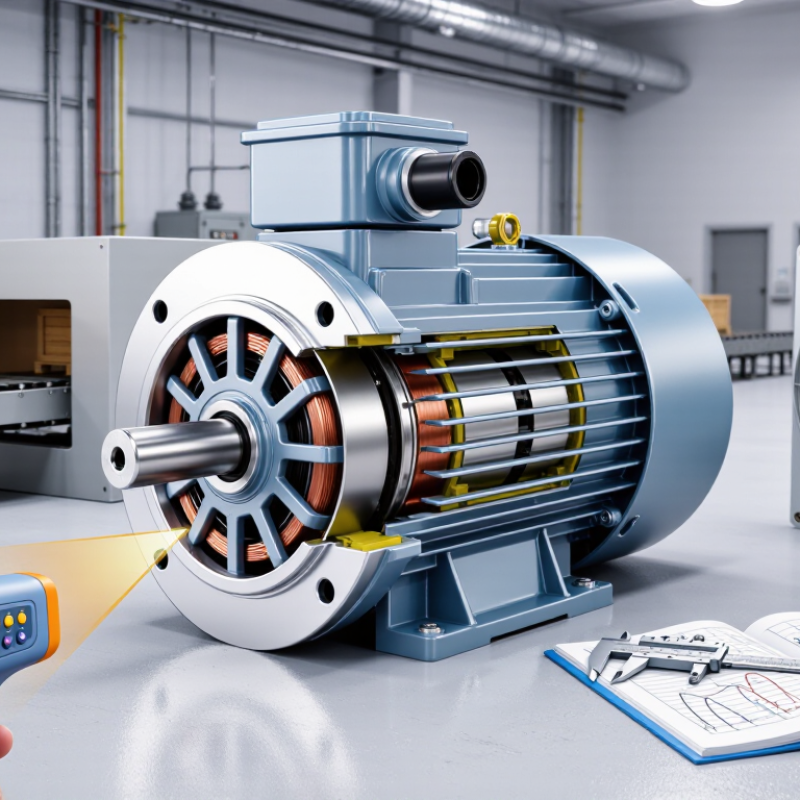
How to Choose a Three Phase Asynchronous Motor

Define the Operating Requirements and Motor Duty

How to Choose a Three Phase Asynchronous Motor

Define the Operating Requirements and Motor Duty

Start with the driven load, not the motor catalogue. Record shaft power, speed, torque, acceleration time, and starting frequency. A conveyor may run steadily, while a crusher can demand sharp torque peaks. These applications need different thermal margins. Measure the actual load when possible. Estimates often hide costly errors.

Specify the duty cycle clearly. IEC 60034-1 distinguishes continuous, short-time, and intermittent duties, including S1, S2, and S3 classifications. Note running hours, starts per hour, reversal frequency, and idle periods. A motor rated for continuous operation may overheat during repeated acceleration. Check ambient temperature, altitude, enclosure, cooling airflow, and dust exposure. Small details matter.

The International Energy Agency reports that electric motor systems consume about 53% of global electricity. Efficient selection therefore affects both production and operating cost. The U.S. Department of Energy also identifies motor-driven systems as a major share of industrial electricity use. Choose the motor from measured torque and duty data, then verify voltage, frequency, efficiency, and overload capacity. Do not rely on rated power alone. A neat spreadsheet can still be wrong. I have seen lightly loaded motors fail because frequent starts were ignored. Recheck the assumptions with a short field test.

Match Voltage, Frequency, Speed, and Power Ratings

How to Choose a Three Phase Asynchronous Motor

Choosing a three phase asynchronous motor starts with the available voltage and frequency. Check the supply carefully at the installation point. A motor rated for 400 V may not suit a 480 V system. Frequency also affects speed, current, and heating. A 50 Hz motor can operate differently on a 60 Hz supply. Read the nameplate, wiring diagram, and local electrical measurements together. Do not rely on memory. Small mistakes become expensive during commissioning.

Speed must match the driven equipment, not just the catalog description. An asynchronous motor runs slightly below its synchronous speed because of slip. A four-pole motor near 1,500 rpm at 50 Hz may run closer to 1,450 rpm under load. Pumps, fans, conveyors, and compressors each respond differently to this change. Consider starting torque and operating torque. A motor with insufficient starting torque may stall before the machine moves. That is a practical warning.

Power selection needs honest load data. Compare the motor’s rated power with the machine’s continuous demand, starting demand, and duty cycle. Oversizing can reduce efficiency and increase purchase costs. Undersizing causes overheating. I have seen calculations based on ideal loads fail in dusty workshops. Leave a sensible margin, but question every assumption. Check ambient temperature, enclosure protection, mounting position, and available cooling. Record the final voltage, frequency, speed, and power ratings before ordering. Recheck them against the measured supply.

How to Choose a Three-Phase Asynchronous Motor

Match the motor’s voltage, frequency, speed, and power ratings with the electrical supply and mechanical load.

This chart shows the relationship between supply frequency, pole count, and motor speed for typical three-phase induction motors. At 50 Hz, synchronous speed is calculated as 120 × frequency ÷ poles. Actual full-load speed is slightly lower because of slip. Before selecting a motor, confirm that its rated voltage matches the supply, its frequency matches the system, its power rating exceeds the load requirement, and its full-load speed suits the driven equipment.

Select the Appropriate Enclosure and Protection Class

Choosing a three phase asynchronous motor involves more than matching power and speed. The enclosure determines how well the motor survives its working environment. Start with the site conditions: dust, humidity, cleaning water, chemicals, temperature, and airflow.

An IP55 enclosure usually protects against harmful dust deposits and water jets from common directions. It may suit an indoor production line with moderate moisture. IP66 offers stronger dust protection and resistance to powerful water jets. However, an IP rating does not mean the motor is waterproof. Continuous immersion requires a different assessment.

Look closely at the cooling method. A totally enclosed, fan-cooled motor protects internal windings from surrounding dust, but its external fan still needs clear airflow. In a dusty workshop, blocked cooling fins can raise winding temperature quickly. That small detail is often missed.

Washdown areas need careful attention. Water can enter through cable glands, terminal boxes, or damaged seals. Select compatible sealing materials and install cables with proper downward loops. Corrosive vapors may also attack painted surfaces and fasteners, even when the IP rating appears suitable.

For reliable selection, compare the enclosure with IEC 60034-5 requirements, the motor’s temperature rating, and the actual installation drawings. If the area contains potentially explosive atmospheres, use equipment with the required certified protection method. Do not treat a higher IP number as a universal solution. I have seen specifications become unnecessarily expensive because exposure was guessed rather than measured. A site survey may reveal that the real weakness is poor drainage, not the motor enclosure.

How to Choose a Three Phase Asynchronous Motor - Select the Appropriate Enclosure and Protection Class

Selection Dimension Typical Options Technical Data Recommended Application Selection Notes
Ingress Protection Class IP23 Protected against solid objects larger than 12.5 mm; protection against vertically falling water drops is limited to the specified test conditions. Clean, dry, indoor electrical rooms or controlled industrial areas. Requires a clean installation environment and adequate ventilation. It is generally unsuitable for dusty or wet locations.
Ingress Protection Class IP44 Protected against solid objects larger than 1 mm and splashing water from all directions. Indoor industrial equipment with moderate dust and occasional splashing. Not dust-tight and not intended for direct water jets, heavy rain, or washdown service.
Ingress Protection Class IP54 Limited protection against dust ingress; protected against water splashes from all directions. General-purpose indoor industrial applications and sheltered outdoor installations. A practical minimum for many industrial environments, provided that the motor is protected from heavy water exposure.
Ingress Protection Class IP55 Dust-protected and protected against water jets from any direction. Outdoor machinery, pumps, fans, conveyors, compressors, and general process equipment. A common choice for industrial service. It does not mean the motor is suitable for continuous immersion or routine high-pressure cleaning.
Ingress Protection Class IP56 Dust-protected and protected against powerful water jets. Exposed outdoor equipment, marine-influenced areas, and locations subject to severe water spray. Confirm the manufacturer’s cleaning and drainage instructions because IP protection does not define corrosion resistance.
Ingress Protection Class IP65 Dust-tight and protected against water jets from any direction. Dust-generating processes, outdoor installations, and equipment requiring a highly sealed motor enclosure. Suitable where dust exclusion is critical. Verify that the cooling arrangement can dissipate heat under the actual load.
Ingress Protection Class IP66 Dust-tight and protected against powerful water jets. Severe dust, exposed outdoor service, and frequent water spray or washdown conditions. Use only when the complete motor construction, cable glands, terminal box, and shaft seals provide the required protection.
Cooling and Enclosure Arrangement Totally enclosed fan-cooled motor The internal windings are separated from the external cooling airflow; an external fan moves air across the frame. Most general-purpose industrial drives, including pumps, fans, conveyors, and machine tools. Keep the external fan cover clean and maintain clearance around the motor to prevent overheating.
Cooling and Enclosure Arrangement Totally enclosed non-ventilated motor No external cooling fan; heat is dissipated through the motor frame and surface. Low-power drives, compact equipment, or applications where an external fan is undesirable. Check the permissible load and duty carefully because cooling performance is usually lower at low speed or high ambient temperature.
Hazardous Area Protection Certified hazardous-area motor Designed and certified for a specified gas, vapor, dust, zone, temperature class, and equipment protection level. Locations where flammable gases, vapors, or combustible dust may be present. IP rating alone is not sufficient. Match the motor certification to the site classification and local electrical regulations.
Ambient Temperature Standard ambient range Many standard motors are rated around 40 °C ambient, but the exact limit depends on the motor design and insulation system. Normal indoor or outdoor installations within the specified temperature range. For higher ambient temperatures, derating or a higher thermal class may be required. Always verify the rating plate and technical documentation.
Insulation System Thermal class F Insulation system rated for a maximum hot-spot temperature of 155 °C under the applicable standard. Common industrial service with normal load and ambient conditions. A higher insulation class does not automatically permit operation above the motor’s rated temperature or current.
Operating Duty S1 continuous duty The motor operates at a constant load long enough to reach thermal equilibrium. Fans, pumps, compressors, conveyors, and other continuously operating machinery. For frequent starts, braking, reversing, or changing loads, select the appropriate intermittent-duty rating instead of assuming S1 is adequate.
Variable-Frequency Drive Compatibility Inverter-duty motor Designed for the voltage stresses, additional heating, and operating-speed range associated with a variable-frequency drive. Speed-controlled pumps, fans, conveyors, mixers, and process machinery. Check minimum speed, maximum speed, bearing-current protection, cable length, and the need for independent or forced ventilation.
Environmental Corrosion Standard or enhanced corrosion protection Protection may include coated frames, stainless-steel hardware, sealed bearings, drain provisions, and corrosion-resistant terminal components. Coastal sites, chemical plants, wastewater facilities, and humid or salt-laden environments. IP classification addresses ingress, not material corrosion. Specify the atmosphere separately and confirm the required coating system.

Important: Select the enclosure and protection class together with rated power, voltage, frequency, speed, mounting arrangement, duty cycle, ambient temperature, altitude, hazardous-area requirements, and the actual cleaning or weather conditions at the installation site.

Evaluate Efficiency, Starting Performance, and Control Needs

Choosing a three-phase asynchronous motor starts with the load, not the nameplate alone. Record shaft power, duty cycle, speed, ambient temperature, and driven equipment inertia. A motor running near its rated load usually wastes less energy than an oversized unit. Yet efficiency figures should be checked at the actual operating point. Look for verified test data, not only a promising efficiency class.

Starting performance matters when a conveyor is full, a pump is loaded, or a fan has high inertia. Direct-on-line starting can produce a sharp current surge and mechanical shock. Measure available supply capacity before selecting that simple method. A soft starter may reduce stress, while a variable frequency drive offers smoother acceleration and speed control. However, each option adds settings, heat, and maintenance responsibility. Do not select a control device by motor power alone. Check starting torque, overload behavior, ramp time, braking needs, and cable length. Details matter.

Control needs should match the operator’s real process. For constant-speed loads, a contactor and suitable protection may be dependable and economical. Frequent speed changes require feedback, adjustable ramps, and protection against motor overheating. During site reviews, I also inspect ventilation, enclosure rating, installation altitude, and unbalanced voltage. Small voltage imbalance can create disproportionate heating. I once treated a lightly loaded motor as harmless, but its long idle periods reduced the expected savings. That mistake reinforced a useful rule: calculate energy over time, not just peak efficiency. Leave room for uncertainty. Confirm the final choice with measured load data and applicable electrical standards.

Verify Installation Conditions, Standards, and Maintenance Requirements

Choosing a three-phase asynchronous motor begins with the installation environment, not the nameplate alone. Check supply voltage, frequency, phase sequence, starting current, altitude, ambient temperature, and duty cycle. Dust, moisture, vibration, and restricted airflow can quickly change motor performance. Select the enclosure and protection level according to IEC 60034-5. Confirm efficiency and operating characteristics under IEC 60034-30-1 and IEC 60034-1. A motor that fits electrically may still fail mechanically if its mounting, shaft load, or coupling alignment is wrong.

Energy use deserves serious attention. The International Energy Agency reports that electric motor systems consume more than half of global electricity. The U.S. Department of Energy also identifies motor-driven equipment as a major share of industrial electricity demand. These figures make efficiency classes important, but efficiency alone is not enough. In practice, oversizing can create poor loading and unnecessary losses. A checklist helps, but it can create false confidence. Installation records should include measured voltage imbalance, insulation resistance, bearing condition, and temperature near the drive end.

Tips: Record baseline readings during commissioning. Inspect terminals for heat discoloration. Schedule cleaning before dust blocks cooling passages. Review vibration trends monthly. If a motor operates below its normal load, question the selection rather than assuming it is harmless. Maintenance intervals should reflect actual duty, contamination, and starts per hour, not only calendar dates. Missing data remains a risk.

FAQS

What should I check before choosing a three-phase asynchronous motor?

Check the measured voltage, frequency, phase sequence, load, speed, and duty cycle. Read the nameplate and wiring diagram together. Do not rely on memory.

Can a motor rated for 400 volts run on a 480-volt supply?

Not automatically. A 400-volt motor may overheat or suffer insulation stress on a 480-volt system. Confirm the supply at the installation point.

How does frequency affect motor performance?

Frequency affects speed, current, heating, and operating behavior. A motor designed for 50 hertz may perform differently on 60 hertz. Check actual measurements.

How do I match motor speed with driven equipment?

Match the motor’s loaded speed with the equipment’s real requirement. A four-pole motor near 1,500 rpm may run around 1,450 rpm under load. Slip matters.

How much motor power should I select?

Compare continuous demand, starting demand, and duty cycle. Oversizing can waste energy and increase cost. Undersizing can cause overheating.A sensible margin helps.

What starting information is important?

Check starting torque, starting current, load inertia, and supply capacity. A full conveyor may need much more torque than an unloaded conveyor. Direct starting can create mechanical shock.

When should I use a soft starter or adjustable-speed drive?

Use a soft starter when smoother starting can reduce stress. Use adjustable speed when the process needs speed changes or controlled acceleration. Check braking, ramp time, heat, and cable length.

Which installation conditions can affect motor life?

Dust, moisture, vibration, altitude, heat, and restricted airflow can reduce performance. Confirm enclosure protection, mounting, shaft loading, and coupling alignment. Small details become expensive.

How can I improve efficiency during operation?

Measure efficiency near the actual operating point, not only at rated load. Avoid leaving an oversized motor lightly loaded for long periods. Calculate energy over time.

What maintenance checks should be recorded?

Record voltage imbalance, insulation resistance, temperature, vibration, and bearing condition. Inspect terminals for heat discoloration. Clean cooling passages before dust blocks airflow.A checklist is not proof.

Conclusion

Choosing a Three Phase Asynchronous Motor begins with a clear understanding of the operating environment and duty cycle. Consider whether the motor will run continuously, intermittently, or under frequent starts and stops, as well as the required load torque and working conditions. Match the motor’s voltage, frequency, rated speed, and power with the available electrical supply and driven equipment. Proper sizing helps prevent overheating, excessive energy use, and poor performance.

The enclosure and protection class should suit conditions such as dust, moisture, chemicals, temperature, and outdoor exposure. Efficiency, starting current, starting torque, speed control, and compatibility with variable frequency drives should also be evaluated. Before installation, verify mounting dimensions, cooling requirements, grounding, safety standards, and local regulations. A practical maintenance plan, including inspection, cleaning, lubrication, and bearing checks, will support reliable operation and extend the motor’s service life.


Mason

Mason

Mason is a seasoned marketing professional with a deep expertise in the company's offerings and a passion for driving brand awareness. With a strong background in digital marketing strategies, he has an innate ability to connect with diverse audiences and effectively communicate product benefits.......