Mining operations depend on motors that can withstand dust, vibration, moisture, heat, and demanding duty cycles. For global buyers, choosing the right Mining Motors requires more than comparing horsepower or purchase prices. A motor that performs well in a dry processing plant may struggle in a deep underground tunnel. Conditions matter.
This guide introduces the top types of mining motors used across extraction, conveying, crushing, ventilation, pumping, hoisting, and mineral processing systems. It examines low-voltage and high-voltage motors, AC induction motors, synchronous motors, DC motors, explosion-protected designs, and geared motor solutions. Each type offers different benefits for starting torque, speed control, energy efficiency, maintenance, and installation space.
Real-world selection begins with the load profile. A conveyor may need steady torque for long operating hours, while a crusher may face sudden mechanical resistance. Underground equipment also requires careful attention to enclosure protection, cooling, cable entry, and local certification requirements. Standards and approvals vary by country, so supplier documents should be checked by qualified engineers.
Small details can decide reliability. Bearing temperature, alignment, insulation class, and spare-part availability all deserve attention. No selection is perfect. A highly efficient motor may cost more upfront, while a cheaper model may create longer shutdowns later. That trade-off is easy to underestimate.
For procurement teams, technical support and proven field experience should carry real weight. Review duty ratings, test reports, warranty terms, and service capability before signing. The best Mining Motors are not simply powerful. They fit the site, the process, and the people maintaining them.
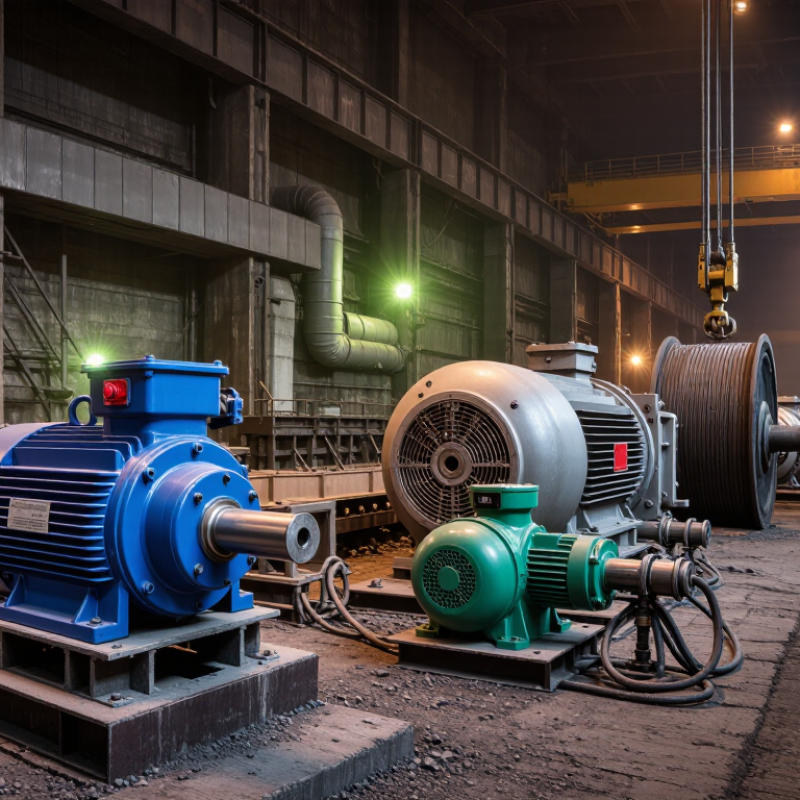
Mining motor selection starts with the working conditions, not the catalog rating. Squirrel-cage induction motors suit many conveyors, pumps, fans, and crushers. They are rugged, widely serviced, and relatively simple to operate. Wound-rotor motors can provide strong starting torque for heavily loaded equipment. Synchronous and permanent-magnet motors may improve efficiency in large, continuously running systems. However, their control equipment and maintenance skills require closer evaluation.
Check rated power, starting torque, speed range, voltage, frequency, and duty cycle. A motor driving a loaded conveyor needs different performance from one operating a ventilation fan. Dust, water spray, vibration, altitude, and restricted airflow can reduce motor life. Choose suitable enclosure protection and cooling arrangements for the site. Confirm temperature limits and required certifications with qualified local engineers. Regional electrical standards also matter. A technically excellent motor can still become difficult to install if documentation or spare parts are unavailable. That risk is often underestimated.
Tips: Ask for verified test data, efficiency curves, protection details, and service records. Compare lifetime energy use, not only purchase price. Leave enough starting margin, but avoid excessive oversizing. Oversizing can lower efficiency and complicate control. Site measurements are valuable. A common mistake is trusting assumed operating conditions instead of checking actual load, ambient temperature, and voltage stability. No selection is perfect; conditions change, so review the motor after commissioning and record real operating performance.
AC induction motors are dependable choices for general mining equipment, including conveyors, crushers, pumps, fans, and hoists. Their simple squirrel-cage design tolerates dust, vibration, and frequent starting. In mine maintenance reviews, technicians often value predictable servicing more than complicated features. A totally enclosed, fan-cooled enclosure can protect internal windings from airborne particles. However, cooling performance may decline in hot, poorly ventilated areas.
Motor selection should match load torque, duty cycle, voltage, altitude, and starting conditions. Conveyor drives may need strong starting torque under a loaded belt. Pumps usually require smoother acceleration and stable operating speed. A variable frequency drive can improve control, but incorrect settings may cause overheating or insulation stress. Check the motor’s efficiency class, ingress protection rating, insulation system, bearing arrangement, and service factor. Small oversights become expensive underground.
Tips:
Confirm the real load before ordering. Measure voltage at the motor terminals, not only at the switchboard. Review dust exposure and washdown conditions. Ask for tested performance data. Keep spare bearings and cooling fans available. No choice is perfect. A careful site assessment usually prevents the hardest failures.
High-voltage motors are central to heavy-duty mining operations powering crushers, conveyors, pumps, fans, and hoists. The International Energy Agency reports that electric motor systems consume roughly 46% of global electricity. In mining, inefficient motors can therefore create substantial operating losses. A 6.6 kV or 11 kV motor usually reduces current and cable losses across long production routes.
Squirrel-cage induction motors remain common for conveyors, crushers, and ventilation systems. They offer sturdy construction, simple maintenance, and strong starting performance. Wound-rotor motors can provide controlled starting torque for heavily loaded mills and hoists. Synchronous motors suit large, constant-speed equipment and can improve power factor. The correct choice depends on load inertia, duty cycle, starting frequency, altitude, and dust exposure. Rated power alone is not enough.
IEC 60034 guidance supports careful checks for temperature rise, insulation, efficiency, and vibration. The Global Mining Guidelines Group also stresses maintainability and condition monitoring in mining electrical systems. In practice, operators should inspect bearings, winding resistance, cooling passages, and alignment during planned shutdowns. That assumption fails underground. High-voltage insulation needs disciplined testing, not occasional visual checks. The U.S. Department of Energy identifies motor-system optimization as a major industrial efficiency opportunity, yet field savings often depend on controls and maintenance. A perfectly sized motor can still waste energy when throttled by poor process design. Engineers should challenge the specification before purchase.
Top Types of Mining Motors for Global Buyers
Explosion-proof motors are essential in underground mines and other hazardous areas. They reduce ignition risks near methane, coal dust, or flammable vapors. However, one motor cannot suit every site. Selection depends on the hazardous-area classification, gas or dust group, temperature class, enclosure rating, and local certification requirements. A rugged cast housing helps resist impact and moisture. Sealed cable entries also prevent dust from reaching internal components. In daily operation, reliable thermal protection matters because overloaded motors can heat quickly in confined tunnels.
Tips: Confirm the site classification before ordering. Check rated voltage, starting current, duty cycle, cooling method, and mounting position. Ask for test records and installation instructions. Inspect cable glands and terminal boxes during maintenance. Small gaps can create serious problems. Do not judge safety from a heavy housing alone.
Field experience shows that motor performance depends on the whole system. Long cable runs may cause voltage drop and difficult starting. Poor ventilation can raise winding temperatures, even when the motor is correctly rated. Dust buildup around cooling fins is easy to overlook. It should not be. Buyers should also consider spare parts, service access, and technician training. Specifications may look perfect on paper, yet unsuitable maintenance can reduce protection and shorten service life. A careful trial installation can reveal problems before full deployment.
Representative rated-power levels commonly used in underground mining and hazardous-area applications
Flameproof motors are widely selected where an enclosure must contain an internal explosion. Increased-safety motors are used where ignition prevention is achieved through enhanced design and protection measures. Slip-ring, synchronous, and submersible motors support high-torque, high-power, or water-exposed mining equipment. Actual motor selection depends on load, duty cycle, voltage, cooling method, gas or dust classification, and applicable IEC or local safety requirements.
Top Types of Mining Motors for Global Buyers
Mining motors must match the machine, load, and site conditions. Conveyor systems often need high-starting-torque motors for heavy, fully loaded belts. Crushers require rugged motors that tolerate sudden impact loads and frequent starts. Large induction motors are common because they offer proven performance and simpler maintenance. Variable frequency drives can improve speed control, but incorrect settings may cause overheating.
Pumps need motors designed for continuous operation and changing fluid demand. Check insulation class, enclosure protection, cooling method, and service factor before purchasing. Hoist motors require precise braking, strong torque, and reliable speed control. Safety depends on the complete drive system, not the motor alone. In field inspections, dust buildup around cooling fins often appears minor. It can still reduce efficiency and shorten service life.
Tips: Confirm altitude, humidity, ambient temperature, voltage, and duty cycle with the supplier. Match motor power to real load data, not rough estimates. Leave access for inspection and bearing replacement. A perfect specification sheet may still fail if installation quality is poor. Recheck alignment after commissioning. Small errors matter underground. Consider spare parts availability, local technical support, and testing records. These details may feel secondary during purchasing, yet they strongly influence downtime and operating costs.
| Motor Type | Primary Mining Application | Typical Power Range | Common Voltage Range | Starting or Speed-Control Method | Key Performance Characteristics | Typical Protection and Cooling | Selection Considerations |
|---|---|---|---|---|---|---|---|
| Squirrel-Cage Induction Motor | Belt conveyors, crushers, screens, fans, and general material-handling equipment | 5.5–15,000 kW | 380–13,800 V | Across-the-line, soft starter, or variable-frequency drive | Rugged construction, low maintenance, reliable continuous-duty operation, and high availability | Usually IP55–IP66; commonly IC411 or IC416 cooling; S1 continuous duty | Check load inertia, acceleration time, starting current, ambient temperature, altitude, and dust exposure |
| Slip-Ring Induction Motor | Large conveyors, crushers, mills, hoists, and systems requiring high starting torque | 250–10,000 kW | 3,300–13,800 V | Liquid-resistance starter, external rotor resistance, or drive system | High starting torque with reduced starting current and controlled acceleration for heavy loads | Typically IP55 or higher; air-to-air or air-to-water cooling for larger ratings | Requires brush, slip-ring, and starter maintenance; evaluate starting frequency and duty cycle |
| High-Efficiency Synchronous Motor | Large conveyors, grinding mills, compressors, high-capacity pumps, and constant-speed drives | 1,000–30,000 kW | 3,300–13,800 V | Direct starting, reduced-voltage starting, or synchronous drive system | High efficiency, improved power factor, stable speed, and reduced electrical losses at large loads | Commonly IP55–IP66; IC81W or other closed cooling arrangements for high-power units | Best suited to large, steady loads; requires excitation, synchronization, and power-factor coordination |
| Permanent-Magnet Synchronous Motor | Gearless conveyors, high-efficiency pumps, variable-speed fans, and compact direct-drive systems | 75–8,000 kW | 400–6,600 V through a suitable drive | Variable-frequency drive with closed-loop or sensorless control | High efficiency over a broad speed range, high torque density, and reduced mechanical transmission losses | Often IP55–IP66; air-cooled or liquid-cooled depending on rating and installation space | Consider magnet temperature limits, drive compatibility, demagnetization risk, and service expertise |
| Wound-Rotor Hoist Motor | Mine hoists, winches, shaft-lifting equipment, and heavy-duty lifting mechanisms | 250–8,000 kW | 3,300–13,800 V | Liquid-resistance starter, cycloconverter, or regenerative variable-frequency drive | High torque at low speed, smooth acceleration, frequent reversing capability, and controlled braking | Usually IP55 or higher; forced ventilation or water cooling may be required for cyclic duty | Review hoist duty class, overload duration, braking system, thermal cycling, and emergency-stop requirements |
| Crusher-Duty Induction Motor | Jaw crushers, cone crushers, impact crushers, feeders, and primary crushing circuits | 75–2,500 kW | 400–13,800 V | Soft starter, variable-frequency drive, or controlled direct starting | High breakdown torque, robust bearings, resistance to shock loading, and tolerance for repeated starts | IP66 is often selected in dusty areas; reinforced sealing and suitable cooling are important | Confirm rotor inertia, blocked-rotor withstand time, belt or coupling arrangement, and vibration limits |
| Process Pump Induction Motor | Dewatering pumps, slurry pumps, cooling-water pumps, drainage systems, and chemical-process pumps | 7.5–5,000 kW | 380–13,800 V | Direct starting, soft starter, or variable-frequency drive | Stable continuous operation, high efficiency, and adaptable speed control for changing flow requirements | Typically IP55–IP66; TEFC or separately ventilated cooling is widely used | Match motor output to pump curve; check liquid ingress, slurry abrasion, corrosion, seal arrangement, and NPSH conditions |
| DC Motor for Specialized Drives | Legacy mine hoists, older conveyors, rolling equipment, and applications requiring high low-speed torque | 100–5,000 kW | 440–1,200 V DC | Thyristor or modern digital DC drive | Wide speed range, strong starting torque, and straightforward speed regulation in existing DC systems | Enclosed or separately ventilated construction; filtration is important in dusty environments | Requires commutator and brush inspection; new installations often compare AC drive conversion costs |
| Explosion-Protected Motor | Underground coal areas, methane-risk zones, explosive dust locations, and classified processing areas | 0.75–1,500 kW | 380–6,600 V | Direct starting, soft starter, or certified variable-frequency drive combination | Controlled surface temperature, sealed construction, and protection against ignition of hazardous atmospheres | Protection method and enclosure depend on the required hazardous-area classification; IP55–IP66 is common | Verify local certification, gas or dust group, temperature class, cable entries, and installation regulations |
Note: Power, voltage, enclosure, cooling, and duty values are typical mining-industry selection ranges. Final motor sizing should be based on the equipment load profile, site conditions, applicable standards, and required certification.
Squirrel-cage induction motors suit conveyors, pumps, fans, crushers, and many hoists. They are rugged and relatively simple to service. A loaded conveyor may need stronger starting torque than a ventilation fan.
Check rated power, starting torque, speed range, voltage, frequency, and duty cycle. Also review efficiency, insulation, bearings, enclosure protection, and cooling. Catalog ratings alone are not enough.
Dust, water spray, vibration, heat, altitude, and restricted airflow can shorten motor life. A dusty tunnel may clog cooling fins. Hot, poorly ventilated areas can raise winding temperatures quickly.
Wound-rotor motors can provide strong starting torque for heavily loaded equipment. They may suit difficult conveyor starts or large lifting systems. Their maintenance needs require honest evaluation.
They can improve speed control and provide smoother acceleration. Incorrect settings may cause overheating or insulation stress. Check motor compatibility, cable length, cooling, and control parameters carefully.
Confirm the area classification, gas or dust group, temperature class, and local certification requirements. Check sealed cable entries, terminal boxes, thermal protection, and enclosure ratings. A heavy housing alone does not prove safety.
Long cables can create voltage drop and difficult starting. Switchboard readings may not show the motor’s actual voltage. Measure under realistic operating conditions.
Match the motor to measured load torque and the real duty cycle. Oversizing may reduce efficiency and complicate control. Leave starting margin, but do not buy unnecessary capacity.
Keep spare bearings and cooling fans available when practical. Inspect cable glands, terminal boxes, cooling surfaces, and vibration regularly. Record actual temperature, load, voltage, and operating performance.
Not necessarily. Compare energy use, service access, spare parts, and technician support. A cheaper motor may become expensive underground. No selection is perfect. Recheck assumptions after commissioning.
Mining Motors are essential to maintaining safe, reliable, and efficient operations across modern mining sites. For global buyers, selecting the right motor requires careful consideration of power requirements, voltage levels, duty cycles, environmental conditions, maintenance needs, and compliance with applicable safety standards. AC induction motors are widely used for general mining equipment because of their dependable performance, simple construction, and flexible applications. For demanding operations involving large loads and continuous service, high-voltage motors provide the power and efficiency needed to support heavy-duty machinery.
Different mining environments also require specialized protection and design features. Explosion-proof motors are suited to underground and hazardous areas where controlling ignition risks is critical. In addition, purpose-built motors for conveyors, crushers, pumps, and hoists are designed to manage varying loads, starting conditions, speed requirements, and operating stresses. By matching motor specifications to each application, mining companies can improve productivity, reduce downtime, support safer operations, and achieve better long-term value from their equipment investments.

NANFANG
