China Top Explosion Proof Pump Motor Manufacturers?

Time:2026-10-20 Author:Aria
0%

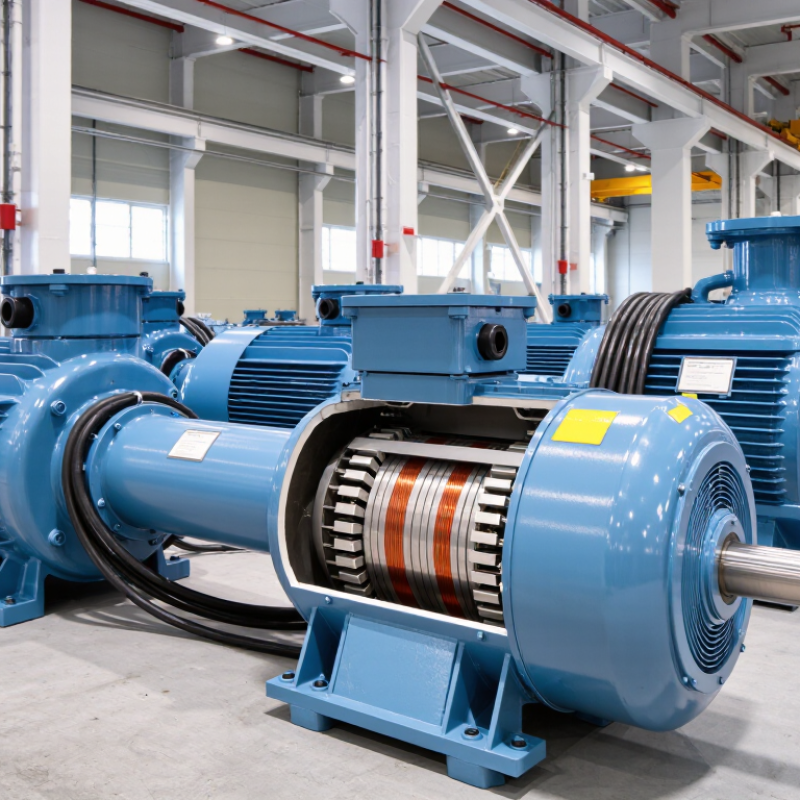
China Top Explosion Proof Pump Motor Manufacturers? This question matters when a pump operates near flammable vapors, combustible dust, or volatile process fluids. A suitable Explosion Proof Pump Motor must control ignition risks while delivering stable torque, cooling, and dependable starting performance.

Electrical safety expert Mike Holt is widely associated with the practical warning, “Safety is not expensive, it is priceless.” That principle fits industrial motor selection. A reliable manufacturer should explain its protection concept clearly, including enclosure design, temperature class, ingress protection, insulation system, and applicable IECEx, ATEX, or Chinese certification routes.

Look beyond catalog power ratings. Ask how each factory validates sealing, vibration, thermal rise, shaft alignment, and cable-entry integrity. Request test records, nameplate photographs, routine inspection procedures, and traceable material information. A serious supplier should also discuss pump duty cycles, liquid temperature, ambient conditions, altitude, and hazardous-zone requirements.

Details reveal experience.

A motor that looks identical may perform differently after months of wet operation. Paint quality, bearing selection, terminal-box space, and spare-part availability can affect maintenance time. Field feedback from chemical plants, water-treatment facilities, and oil-handling sites adds useful evidence, though testimonials alone are not proof.

No ranking is perfect. Some manufacturers publish impressive specifications but offer limited technical support after delivery. Others may have strong engineering teams yet weaker documentation. This guide compares China’s leading manufacturers through certification credibility, production capability, customization, quality control, delivery reliability, and service responsiveness. Readers should still verify current certificates and local compliance before purchase. Small oversights can become costly.
China Top Explosion Proof Pump Motor Manufacturers?

What Is an Explosion-Proof Pump Motor?

An explosion-proof pump motor is an electric motor designed for hazardous areas where flammable gas, vapor, or dust may exist. Its enclosure limits sparks, flames, and hot surfaces from reaching the surrounding atmosphere. It does not prevent an explosion inside the motor. It controls the consequences.

The housing uses carefully machined joints, strong materials, and certified cable entries. Internal pressure may be contained during an ignition event. Surface temperature also matters, because overheated metal can ignite nearby substances. Engineers select the temperature class, protection level, insulation system, and cooling method according to the site conditions. A pump moving solvent, fuel, or chemical liquid needs more than ordinary motor protection.

The motor must match the pump load, starting method, voltage, frequency, and operating speed. Installation is equally important. Incorrect glands, loose terminals, poor grounding, or damaged seals can defeat a certified design. The surrounding area should be classified by qualified professionals before equipment selection. Certification requirements also differ between countries and industries.

The label alone is not enough. A cheaper motor may appear suitable but fail under continuous heat, vibration, or frequent starts. That assumption needs correction. Regular inspections should check bearings, cable entries, surface temperature, and enclosure joints. No design is perfect. Even a certified explosion-proof pump motor depends on correct installation, maintenance, and disciplined operating practices.

How Explosion-Proof Pump Motors Are Classified in China

China Top Explosion Proof Pump Motor Manufacturers?

How Explosion-Proof Pump Motors Are Classified in China

China classifies explosion-proof pump motors through the GB/T 3836 series, aligned closely with IEC 60079 requirements. Selection begins with the hazardous area. Zone 0 contains explosive gas continuously or for long periods. Zone 1 allows gas during normal operation. Zone 2 expects gas only occasionally. Dust risks use Zones 20, 21, and 22. This distinction affects the motor’s protection level, enclosure design, and certification route.

Motor markings also identify gas groups and temperature classes. Gas groups IIA, IIB, and IIC reflect increasing ignition sensitivity. IIC requires the most demanding design. IEC 60079-20-1 lists maximum surface temperatures from 450°C for T1 to 85°C for T6. A common Chinese marking may read Ex db IIB T4 Gb. Here, “db” describes flameproof protection, IIB identifies the gas group, T4 limits surface temperature to 135°C, and Gb indicates equipment protection for Zone 1.

In practical pump projects, engineers should verify the liquid, vapor release rate, ambient temperature, starting current, and maintenance conditions. A motor suitable for Zone 2 may be unsuitable for Zone 1. That error is easy to make. Certification markings alone do not guarantee correct application. IEC 60079-10-1 and the GB/T 3836 framework require careful area classification before procurement. Field conditions can also differ from drawings, especially near seals, vents, and transfer connections. This is where selection often needs a second review.

How Explosion-Proof Pump Motors Are Classified in China

Under China’s GB/T 3836 series, which is aligned with the IEC 60079 framework, explosion-proof pump motors are classified by protection concept, hazardous-area equipment group, gas or dust group, and temperature class. The chart shows the maximum permitted external surface temperature for gas temperature classes T1–T6. A lower temperature class limit indicates stricter thermal control for the surrounding explosive atmosphere.

Key Certifications and Standards for Chinese Manufacturers

Chinese explosion-proof pump motor manufacturers should be judged by certification depth, not catalog size. The IECEx 2023 Annual Report indicates that its certification system serves more than 30 participating economies. This matters because international buyers increasingly request traceable Ex documentation. In China, GB/T 3836 standards align closely with the IEC 60079 series. Applicable products may also require China Compulsory Certification. ISO 9001 supports production control, but it does not prove explosion-proof performance.

Check the exact marking. For example, Ex db IIB T4 Gb identifies protection method, gas group, temperature class, and equipment protection level. Dusty environments need different evidence, such as Ex tb IIIC protection. Pump and motor certificates may be separate. System integration still needs review. A certificate alone is not enough. The IECEx system uses ISO/IEC 80079-34 quality requirements, including controlled drawings, component traceability, and corrective actions. Factory audits should verify flamepath dimensions, cable entries, thermal protection, and final pressure testing. Small details matter.

The International Energy Agency’s World Energy Investment 2024 report shows continuing industrial investment in electrification and energy infrastructure. That growth raises demand for dependable motors, but it also exposes weak documentation. Some suppliers provide test reports without current certificates. That is a warning sign. Buyers should request certificate numbers, certification scope, enclosure IP evidence, routine-test records, and material traceability. One practical weakness remains common: paperwork may describe the motor, while the delivered pump assembly differs slightly. That gap deserves a second review.

Leading China-Based Explosion-Proof Pump Motor Manufacturers

China-based explosion-proof pump motor manufacturers are increasingly judged by engineering evidence, not price alone. The International Energy Agency’s Energy Efficiency 2023 report indicates that electric motor systems consume roughly half of global electricity. That figure makes efficiency a plant-level concern. Buyers should request IE3 or IE4 test data, verified duty points, and efficiency curves under actual pump loads. Ask for measured results.

For hazardous-area service, manufacturers should demonstrate compliance with IEC 60079 and China’s GB/T 3836 series. The U.S. Department of Energy’s 2022 Motor Systems Market Assessment reports that motor-driven systems may account for about 46% of global electricity consumption. A small efficiency loss can therefore increase operating costs across thousands of running hours. Review enclosure ratings, temperature-rise tests, shaft sealing, bearing life, and thermal protection. Details matter.

Factory audits can reveal more than polished brochures. Check winding records, rotor balancing equipment, pressure-test procedures, and certificate traceability. Request serial-number inspection reports and sample test results. A dependable China-based supplier should explain how its motor matches flow, head, viscosity, and starting conditions. One weakness remains: some specifications look complete but omit ambient temperature or altitude limits. That omission deserves a written correction before purchase. Pricing is useful, but lifecycle evidence is stronger.

How to Compare Manufacturers and Select the Right Supplier

China Top Explosion Proof Pump Motor Manufacturers?

How to Compare Manufacturers and Select the Right Supplier

Choosing a Chinese explosion-proof pump motor manufacturer requires more than comparing prices. Start with the operating site, not the catalog. Record the medium, flow, pressure, ambient temperature, hazardous-zone classification, voltage, frequency, and duty cycle. Ask whether the motor matches the pump’s starting torque and continuous load. Small mismatches can cause heat, vibration, or early seal failure. Get the details in writing.

Compare technical evidence beside commercial offers. Request drawings, material lists, routine test records, temperature-rise data, and valid certification for the intended market. Check enclosure protection, temperature class, cable entries, insulation systems, and shaft-seal design. A reliable supplier explains test methods clearly. They should provide serial-number traceability and a practical spare-parts plan. Certificates alone are not enough.

Audit the factory when possible. Review winding, balancing, assembly, and final inspection areas. Ask to see calibration records, not only polished photographs. Speak with engineers who can answer application questions without avoiding difficult points. Before approval, test a sample under realistic load. Confirm current, temperature, noise, vibration, and starting performance. Delivery promises matter, but technical response time matters more. I would also leave room for doubt. A low quote may hide thinner materials, limited testing, or weak after-sales support. That risk deserves a line-by-line comparison.

China Top Explosion Proof Pump Motor Manufacturers? - How to Compare Manufacturers and Select the Right Supplier

Evaluation Dimension Recommended Benchmark or Requirement What to Verify from the Supplier Selection Importance
Hazardous-area classification The motor protection concept must match the classified area, such as Zone 1 or Zone 2 for gas hazards, or Zone 21 or Zone 22 for combustible dust. Area classification drawing, gas or dust group, temperature class, ambient temperature, and installation orientation. Critical
Explosion-protection certification Certification should be issued under a recognized conformity system, such as IECEx or ATEX, when required by the destination market. Certificate number, certificate scope, equipment protection level, protection type, gas or dust group, and temperature class. Critical
Protection concept Common motor protection types include flameproof enclosure “Ex d”, increased safety “Ex e”, and protection by enclosure for dust “Ex t”. The selected type must match the certificate and application. Complete marking on the nameplate and consistency between the certificate, motor documentation, and delivered product. Critical
Temperature class For gas atmospheres, typical classes range from T1 to T6. A higher class number permits a lower maximum surface temperature; the required class depends on the hazardous substance. Maximum surface temperature, ambient-temperature range, overload assumptions, and compatibility with the process gas or vapor. Critical
Ingress protection IEC 60529 ratings should be appropriate for the environment. IP55 provides protection against dust ingress that could interfere with operation and water jets; harsher environments may require higher protection. Certified IP rating, test report, shaft-seal arrangement, drain plugs, and suitability for washdown, outdoor, or dusty service. High
Motor efficiency IEC 60034-30-1 defines efficiency classes including IE1, IE2, IE3, and IE4 for applicable motors. IE3 or higher is commonly evaluated for continuous-duty industrial applications where regulations and operating hours justify it. Rated efficiency at the intended load, test method, efficiency-class declaration, and any derating caused by hazardous-area construction. High
Pump and motor compatibility The motor rating must cover the pump shaft power at the complete operating range, including starting, maximum flow, viscosity changes, and possible system deviations. Pump curve, motor power, speed, torque, service factor, starting current, coupling details, and minimum stable operating point. Critical
Electrical ratings Voltage, frequency, phase, connection method, and rated current must match the power system. Common industrial supplies include three-phase 380–415 V at 50 Hz, but the project specification controls. Nameplate data, voltage tolerance, frequency tolerance, terminal-box arrangement, cable-entry size, and short-circuit withstand requirements. High
Insulation and thermal protection Class F insulation is widely used in industrial motors. Embedded temperature sensors, such as PTC or RTD devices, can support thermal monitoring when specified by the control system. Insulation class, allowable temperature rise, winding-resistance records, sensor type, sensor quantity, and protective-trip settings. High
Bearing and sealing arrangement Bearing type, lubrication method, shaft-seal design, and expected service life must be suitable for the pump load, speed, temperature, and operating cycle. Bearing calculations, grease specification, relubrication interval, seal material, allowable radial or axial load, and spare-parts availability. High
Variable-frequency-drive suitability If speed control is required, the motor, drive, cable, and hazardous-area certification must be approved as a complete application. Inverter operation may require additional thermal protection and output filtering. Permitted frequency range, torque curve, certified VFD conditions, bearing-current mitigation, minimum speed, and cable-length limits. Critical
Quality-control documentation A traceable manufacturing and testing process should cover incoming materials, winding, machining, assembly, electrical testing, balancing, and final inspection. Quality plan, inspection and test plan, material certificates, test records, calibration certificates, serial-number traceability, and nonconformance procedure. High
Routine and type testing Testing should be aligned with the applicable IEC motor standards and the explosion-protection certificate. Typical checks include winding resistance, insulation resistance, high-voltage withstand, no-load performance, vibration, and noise. Factory acceptance-test procedure, test equipment details, acceptance criteria, witnessed-test options, and signed test certificates. High
Vibration and mechanical balance The motor should meet the vibration limits specified for its machine class and operating speed. Dynamic balancing is essential for reliable pump operation. Balance grade, vibration measurement points, coupling alignment procedure, rotor inspection, and acceptance limits at rated speed. High
Customization capability Useful customization may include special flange dimensions, vertical mounting, dual voltage, anti-condensation heaters, independent cooling, corrosion-resistant coatings, and instrumentation. Approved drawings, engineering-change process, prototype procedure, compatibility review, and confirmation that modifications do not invalidate certification. High
Lead time and delivery control The quoted lead time should include engineering approval, certification review, production, testing, packing, and export documentation rather than only assembly time. Milestone schedule, production capacity, critical-component availability, inspection hold points, shipping terms, and delay-notification process. Medium
Warranty and after-sales support A practical support program should define warranty duration, covered failures, response time, troubleshooting procedure, repair authorization, and spare-parts service. Written warranty terms, service contacts, troubleshooting guides, recommended spare-parts list, repair capability, and escalation process. Medium
Supplier comparison method Use a weighted scorecard: certification and safety 30%, technical fit 25%, quality documentation 20%, lifecycle cost 15%, and delivery and service 10%. Disqualify any supplier that fails a mandatory safety requirement. Request identical documents and quotations from each candidate, score only verifiable evidence, and conduct a technical clarification before issuing the purchase order. Decision framework

FAQS

What is an explosion-proof pump motor?

It is an electric motor for areas containing flammable gas, vapor, or dust. Its enclosure limits ignition risks. It does not prevent every internal explosion.

How does the motor control ignition hazards?

Strong housing, machined joints, sealed cable entries, and controlled surface temperatures reduce risk. Internal pressure may remain contained during ignition. No design is perfect.

Which hazardous-area classification affects motor selection?

Gas areas use Zones 0, 1, and 2. Dust areas use Zones 20, 21, and 22. Zone 0 presents the most continuous gas exposure.

What do gas groups and temperature classes mean?

Gas groups show ignition sensitivity. IIC requires more demanding protection than IIB or IIA. Temperature classes limit surface heat, with T6 allowing the lowest temperature.

Can a Zone 2 motor operate in Zone 1?

Not automatically. A Zone 2 motor may lack the required protection level for Zone 1. Area classification should be reviewed by qualified professionals.

What should engineers check before selecting the motor?

They should check liquid type, vapor release, flow, head, viscosity, voltage, frequency, speed, and starting current. Ambient temperature and altitude matter too.

Why is installation as important as certification?

Incorrect cable glands, loose terminals, poor grounding, or damaged seals can defeat certified protection. A correct label cannot repair poor installation.

How can buyers evaluate a motor supplier?

Request efficiency curves, test data, certificate traceability, winding records, rotor balancing details, and pressure-test procedures. Factory evidence is more useful than polished brochures.

What maintenance checks are important?

Inspect bearings, cable entries, enclosure joints, seals, grounding, vibration, and surface temperature. Frequent starts can add stress. Small omissions deserve another review.

Conclusion

An Explosion Proof Pump Motor is a specially engineered motor designed to operate safely in environments where flammable gases, vapors, dust, or liquids may be present. This article explains how these motors prevent internal sparks or excessive heat from igniting surrounding substances, and how they are classified in China according to factors such as hazardous location, protection method, temperature rating, and equipment category. It also introduces the key certifications and standards buyers should review, including relevant Chinese requirements and internationally recognized testing principles.

The guide further outlines how to evaluate China-based manufacturers without focusing on any specific brand. Important comparison points include product performance, enclosure design, efficiency, material quality, customization capability, certification documentation, testing procedures, delivery reliability, and after-sales support. By matching the motor’s protection class, power, speed, operating environment, and pump requirements with a supplier’s technical capabilities, buyers can make a safer, more cost-effective, and better-informed purchasing decision.


Aria

Aria

Aria is a dedicated marketing professional with a deep passion for innovative strategies and a keen understanding of our company's product offerings. With a wealth of experience in the industry, Aria excels at crafting engaging content that highlights the unique features and benefits of our......