China Top Squirrel Cage Induction Motor Manufacturers?

Time:2026-09-25 Author:Sophia
0%

China is a major source of squirrel cage induction motors, serving factories, water systems, fans, compressors, and material-handling equipment. But “top manufacturer” depends on the job. A motor suited to a pump may not fit a dusty workshop or a variable-speed production line. Buyers should compare rated power, efficiency class, voltage, frequency, enclosure, insulation, and starting performance. Check the nameplate details, not just the catalog image.

Electrical-machinery author Stephen J. Chapman writes, “The induction motor is the most commonly used motor in industry.” That practical relevance makes careful supplier checks worthwhile. This guide examines Chinese manufacturers through product range, technical documentation, quality controls, customization, export experience, and after-sales support. Ask for test records and confirm which standards apply to the intended market. Look closely at winding materials, bearing options, cooling design, and delivery terms. Small details matter.

A polished website is not proof of consistent production. Nor is the lowest quote automatically the best value. No shortlist is perfect; supplier information can be incomplete, and buyers should verify claims directly. The comparisons ahead are a starting point, not a substitute for checking drawings, certificates, and sample test data. For a Squirrel Cage Induction Motor, the right choice is the one that meets the operating conditions reliably—not merely the one with the strongest sales pitch.
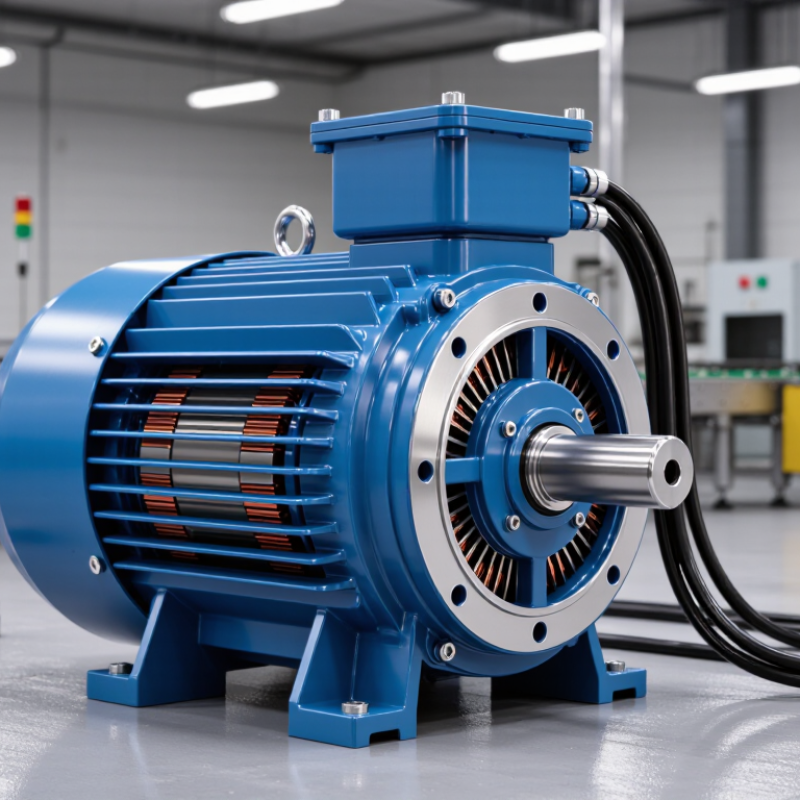
China Top Squirrel Cage Induction Motor Manufacturers?

What Is a Squirrel Cage Induction Motor?

A squirrel cage induction motor converts electrical energy into mechanical rotation through electromagnetic induction. Its stator contains insulated copper or aluminum windings. Inside, the rotor uses conductive bars joined by end rings, forming a cage-like circuit. There are no brushes or slip rings. That makes the motor mechanically simple and resistant to dust, vibration, and routine wear.

When three-phase current creates a rotating magnetic field, the field cuts across the rotor bars. This induces current in the rotor and produces torque. The rotor always turns slightly below synchronous speed. This difference is called slip. Without slip, induction would stop. The machine usually delivers reliable starting and steady operation for pumps, fans, compressors, conveyors, and machine tools. It is not a perfect choice for every load; direct starting can create high inrush current and mechanical stress.

The International Energy Agency has reported that electric motor systems consume roughly 46% of global electricity. The U.S. Department of Energy also identifies motor-driven equipment as a major share of industrial electricity use. Therefore, efficiency deserves careful attention. IEC 60034-30-1 defines motor efficiency classes, including IE2, IE3, and IE4. Higher efficiency can reduce heat, operating cost, and carbon emissions over years of service. Yet efficiency labels alone are insufficient. Engineers should check load profile, starting method, enclosure protection, voltage, frequency, and service conditions. A well-sized motor often saves more energy than an oversized premium model. Practical testing still matters.

China’s Squirrel Cage Motor Manufacturing Industry

China’s squirrel cage motor manufacturing industry has developed through large-scale production and practical engineering experience. Manufacturers commonly produce low-voltage and medium-voltage induction motors for pumps, fans, compressors, conveyors, and machine tools. The squirrel cage rotor uses conductive bars, usually aluminum or copper, inside a laminated steel core. This design has no brushes, which reduces routine maintenance and improves operating reliability.

Quality depends on more than production volume. Experienced factories inspect rotor balance, winding resistance, insulation strength, vibration, noise, and temperature rise. Many workshops use automated winding equipment, dynamic balancing machines, and load-testing systems. Engineers also check efficiency under different operating conditions, because a motor that performs well without load may lose efficiency in a demanding factory. Standards and test records matter. Yet, specifications can still be misunderstood between buyers and suppliers. Small differences in voltage, frequency, duty cycle, or mounting position may create expensive problems.

Tips: Request complete test data, not only a catalogue rating. Confirm IP protection, insulation class, efficiency level, shaft dimensions, and bearing details. Ask how the factory handles sample approval and final inspection. A site audit can reveal practical issues, such as dusty assembly areas or weak packaging. Do not judge every manufacturer by price alone. Reliability is often hidden inside materials, testing discipline, and after-sales technical support.

China Top Squirrel Cage Induction Motor Manufacturers? - China’s Squirrel Cage Motor Manufacturing Industry
Manufacturing Dimension Typical Industry Data Technical Details Buyer Relevance
Motor Construction Three-phase squirrel cage induction motor Rugged rotor design without brushes or slip rings; commonly manufactured with cast-aluminum or copper rotor cages. Suitable for continuous-duty industrial equipment and applications requiring low maintenance.
Common Power Range Approximately 0.12 kW to 1,000 kW or more Small aluminum-frame motors are common below approximately 45 kW, while cast-iron and fabricated-frame designs are widely used at higher ratings. Enables sourcing for pumps, fans, compressors, conveyors, machine tools, and heavy industrial systems.
Rated Voltage and Frequency 380 V or 400 V, three-phase, 50 Hz are common configurations Other voltage and frequency combinations, including 220/380 V, 400/690 V, 460 V, and 60 Hz, can be specified for export markets. Voltage, frequency, connection method, and starting current must match the local electrical system.
Number of Poles Two, four, six, and eight poles are the most widely used At 50 Hz, synchronous speeds are 3,000, 1,500, 1,000, and 750 rpm respectively; actual operating speed is lower because of slip. Pole selection determines speed, torque characteristics, efficiency, and equipment compatibility.
Efficiency Classification IE1 to IE4 efficiency classes are commonly specified; IE5 technology is available for selected designs Efficiency classification is defined internationally under IEC 60034-30-1, with national minimum-efficiency requirements applying in several markets. Higher-efficiency motors can reduce lifecycle energy costs, especially in continuously operated systems.
Protection Rating IP55 is a common industrial configuration Higher protection ratings such as IP56, IP65, and IP66 may be selected for dusty, wet, outdoor, or washdown environments. The enclosure must be selected according to dust, water, chemical, and outdoor exposure levels.
Insulation and Temperature Class Class F insulation is widely used; Class H is available for higher thermal demands Many industrial motors are designed with a Class F insulation system and a lower temperature-rise limit to improve service margin. Thermal design affects service life, overload capability, ambient-temperature tolerance, and reliability.
Mounting and Frame Standards IEC mounting forms such as B3, B5, and B35 are widely requested Common frame and mounting references include IEC 60072 and related national standards; shaft height and flange dimensions must be verified. Standardized dimensions simplify replacement, integration, and cross-border equipment installation.
Operating Duty S1 continuous duty is the most common requirement Motors for intermittent, short-time, or high-starting-load applications may require different duty classifications and thermal designs. Correct duty selection prevents overheating and helps ensure the expected operating life.
Variable-Frequency Drive Compatibility VFD-compatible motor options are widely available VFD-duty designs may require reinforced insulation, independent cooling, suitable bearings, and protection against bearing currents. Important for speed control, energy saving, soft starting, and process automation.
Main Application Sectors Pumping, ventilation, compressors, conveyors, machine tools, material handling, and general machinery Specialized versions may be configured for cranes, mills, hazardous areas, marine systems, high-altitude sites, or harsh environments. Application-specific requirements should be confirmed before comparing quotations or factory capabilities.
Quality and Compliance Documents Routine test reports, efficiency data, dimensional drawings, and conformity documents are commonly requested Typical references include IEC 60034 series standards, ISO 9001 quality systems, CE requirements for applicable markets, and local certification rules. Documentation helps verify performance, regulatory compliance, traceability, and suitability for the destination market.
The table summarizes commonly specified characteristics and manufacturing capabilities in China’s squirrel cage induction motor industry. Company and brand names are intentionally omitted.

Leading Chinese Manufacturers and Their Company Profiles

China’s top squirrel cage induction motor manufacturers are not defined by size alone. Their profiles differ by engineering depth, production scale, and export experience. Some factories focus on standard three-phase motors for pumps, fans, compressors, and conveyors. Others develop customized units for harsh industrial environments.

Experienced Chinese manufacturers usually maintain in-house design teams, casting workshops, winding lines, and load-testing areas. Their company profiles often highlight IEC compliance, insulation testing, balancing accuracy, and routine performance checks. ISO-based quality systems may support consistency, but certification alone proves little.

Buyers should inspect test records, factory capacity, motor efficiency data, and after-sales response. A supplier with clear documentation often appears more reliable than one making broad claims. Still, no profile is flawless.

Tips:

Request a recent factory video, sample test report, and production timeline. Confirm voltage, frequency, enclosure rating, mounting method, and duty cycle before ordering. Ask how the manufacturer handles vibration, bearing noise, and rejected units. Export experience matters, yet communication can remain imperfect. Allow time for technical clarification. Small details matter.

Chinese motor manufacturers may also differ in rotor design, copper content, cooling structure, and customization speed. A serious supplier should explain these choices in practical terms. Review references from similar applications, not only general customer lists. Visit the facility when possible. A spreadsheet cannot replace direct observation.

Motor Designs, Specifications, and Common Applications

China’s squirrel cage induction motor manufacturers offer several practical designs for industrial duty. The standard TEFC motor uses a ribbed cast-iron or aluminum frame. Its enclosed fan keeps dust away from the windings. A squirrel cage rotor has no brushes or slip rings. This reduces maintenance during long operating cycles. In field inspections, alignment often matters more than expected. Poor coupling can cause noise, heat, and premature bearing wear.

Common specifications include three-phase supply, 50 or 60 Hz frequency, and two-, four-, or six-pole speeds. Power ratings may range from small fractional-kilowatt units to large industrial motors. IE3 or IE4 efficiency classes help reduce energy losses. Class F insulation is widely selected for demanding temperature conditions. IP55 protection suits many indoor factories, but outdoor sites may require stronger sealing. Check the service factor carefully. It is not a substitute for correct sizing.

These motors commonly drive pumps, fans, compressors, conveyors, mixers, and machine tools. A four-pole motor often fits pumps and conveyors because its speed balances torque and efficiency. Variable-frequency drives can provide smoother starting and speed control. However, inverter operation may require reinforced insulation and suitable bearings. Test data should include efficiency, vibration, temperature rise, and no-load current. Catalog figures are useful, but real installation conditions can differ. Humidity, dust, voltage imbalance, and frequent starts deserve careful review. Some selections still fail because engineers focus only on rated power.

How to Compare and Select a Chinese Motor Manufacturer

How to Compare and Select a Chinese Squirrel Cage Induction Motor Manufacturer

“Top” should not mean the loudest online presence. It should mean verified performance, stable production, and clear technical communication.

The International Energy Agency reports that electric motor systems use roughly half of global electricity. Small efficiency losses can therefore become large operating costs.

Compare rated efficiency, power factor, starting current, temperature rise, and service factor under the same test conditions. Request test records based on IEC 60034-30-1 or applicable Chinese standards. Do not compare catalog numbers alone.

A reliable factory should provide rotor balancing records, winding test results, insulation-class details, bearing specifications, and enclosure protection ratings. Ask for a load-test video showing the nameplate beside the measuring equipment. Check whether the report identifies the instrument model and calibration date. A third-party inspection can verify dimensions, noise, vibration, and efficiency before shipment.

The U.S. Department of Energy notes that motor efficiency and correct sizing strongly influence lifecycle costs, not only purchase price. This matters in pumps, compressors, and conveyor lines.

Visit the production site when possible. Observe copper storage, machining controls, final assembly, and spare-parts handling. Review delivery history and warranty response times. A five-year warranty sounds impressive, but its exclusions may matter more.

I would also test a sample motor at partial load, because real factories rarely operate at full rating. My comparison method is not perfect. Supplier documents can be selective, and one successful sample proves little.

Ask difficult questions. Record every answer.

FAQS

What is a squirrel cage induction motor?

It changes electrical energy into mechanical rotation through electromagnetic induction. Its rotor uses conductive bars joined by end rings. No brushes or slip rings are needed.

How does the motor produce torque?

Three-phase current creates a rotating magnetic field in the stator. This field crosses the rotor bars and induces current. The interaction produces torque.

Why does the rotor run below synchronous speed?

The rotor needs slip to maintain electromagnetic induction. If both speeds matched, rotor current would stop. That point is easy to overlook.

Where are these motors commonly used?

They often drive pumps, fans, compressors, conveyors, and machine tools. These applications need steady rotation. The motor suits many, not every load.

What is one disadvantage of direct starting?

Direct starting can create high inrush current. It may also cause mechanical stress in shafts, couplings, and driven equipment. A suitable starting method deserves attention.

Why does motor efficiency matter?

Motor-driven equipment uses a large share of industrial electricity. Higher efficiency can reduce heat, operating cost, and emissions over several years. Savings depend on actual loading.

Is a higher efficiency rating always the best choice?

Not necessarily. Engineers should check load profile, voltage, frequency, enclosure protection, and service conditions. A correctly sized motor may outperform an oversized premium model.

How should buyers evaluate a motor manufacturer?

Request recent test records, a factory video, and a clear production timeline. Check insulation tests, balancing accuracy, load testing, and quality procedures. Certification alone proves little.

What technical details should be confirmed before ordering?

Confirm voltage, frequency, enclosure rating, mounting method, and duty cycle. Also ask about vibration, bearing noise, cooling, rotor design, and rejected units. Small details matter.

Can a company profile prove manufacturing quality?

No. In-house design, casting, winding, and testing can support consistency. Still, direct observation and application-specific references remain valuable. A spreadsheet cannot replace a factory visit.

Conclusion

A Squirrel Cage Induction Motor is a reliable, brushless AC motor known for its simple construction, strong durability, and low maintenance requirements. Its rotor uses conductive bars connected by end rings, allowing the motor to operate efficiently without external electrical connections. In China, the manufacturing industry has developed comprehensive capabilities covering motor design, casting, machining, winding, assembly, testing, and export support. Manufacturers commonly produce motors for industrial machinery, pumps, fans, compressors, conveyors, agricultural equipment, and other demanding applications.

When evaluating Chinese motor suppliers, buyers should compare power range, voltage, frequency, efficiency class, insulation system, enclosure protection, cooling method, starting performance, operating environment, and customization options. Certification, quality-control procedures, delivery capacity, warranty terms, technical service, and long-term supply stability are also important factors. Selecting a suitable manufacturer requires balancing technical performance, product reliability, total cost, communication efficiency, and after-sales support to ensure the motor matches both the application and operating conditions.


Sophia

Sophia

Sophia is a dedicated marketing professional with an exceptional depth of knowledge about her company's products and services. With a keen understanding of market trends and customer needs, she crafts insightful blog posts that not only inform but also engage readers, enriching the company’s online......