Choosing the right Coal Mine Motor can influence productivity, equipment life, and worker safety underground. Mining environments create demanding conditions. Dust enters housings, temperatures fluctuate, and motors may face continuous heavy loads. Water, vibration, and restricted maintenance access add further pressure. The details matter.
A suitable motor should match the conveyor, crusher, pump, or hoist it drives. Engineers normally assess rated power, starting torque, duty cycle, speed, cooling method, and enclosure protection. They also review the mine’s ventilation, humidity, temperature, and hazardous-area requirements. Certified equipment and documented testing remain essential. Manufacturer datasheets provide useful limits, but site experience often reveals practical concerns. A motor that performs well on the surface may struggle in a deep, dusty tunnel. That assumption can fail.
Reliable selection also depends on maintenance planning. Technicians need accessible terminals, clear inspection points, compatible bearings, and available replacement parts. Condition monitoring can identify rising temperatures, unusual vibration, or insulation problems before failure stops production. Independent inspections and records strengthen confidence in the decision. Still, no motor removes every operational risk. Incorrect installation, poor alignment, or delayed servicing can reduce performance quickly. This is where professional judgment matters.
This article explores why mining operators choose a Coal Mine Motor, how its design supports demanding work, and which evaluation points deserve careful attention. It considers performance, durability, safety, efficiency, and long-term operating value. The best choice is rarely the most powerful model. It is the motor that fits the application, the environment, and the maintenance reality.
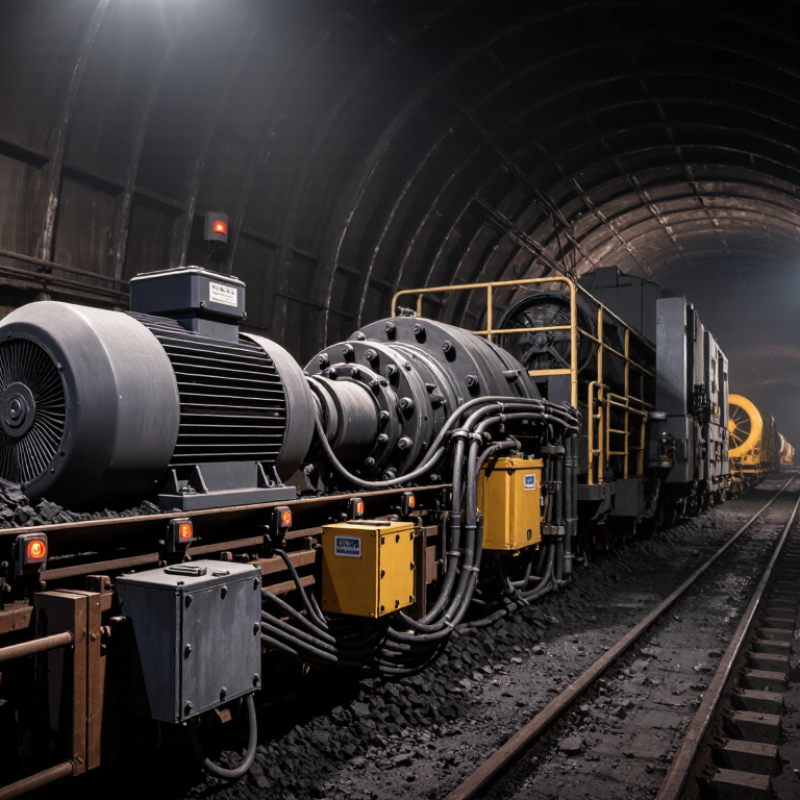
Why Choose a Coal Mine Motor for Mining Operations?
Methane readings below 1.0% do not make ignition risk disappear. Gas levels can change quickly near working faces, conveyors, and poorly ventilated headings. A certified explosion-proof motor helps contain internal sparks and hot surfaces. It also reduces the chance of igniting methane or coal dust outside the enclosure.
In practical mine maintenance, motor selection should match the site’s hazardous-zone classification, voltage, load, and ventilation conditions. Look for a robust enclosure, suitable temperature rating, sealed cable entries, and clear certification documents. Thermal protection matters too. Overloaded motors can heat rapidly, even when methane monitoring appears normal. Continuous gas detection should work alongside the motor, not replace it.
It still matters.
Inspection routines deserve equal attention. Technicians should check terminal boxes, cable glands, cooling passages, bearings, and enclosure joints. Dust packed around a housing can restrict cooling and hide damage. A correctly certified motor can still become unsafe when seals crack or fasteners loosen. That is an uncomfortable but practical lesson. Maintenance records should include test results, repair dates, and observed defects. Small gaps matter. Selecting a coal mine motor is therefore less about power alone and more about controlled operation under changing underground conditions.
| Selection Dimension | Typical Reference Value | Why It Matters in Coal-Mine Operations | Motor Selection Implication |
|---|---|---|---|
| Methane monitoring threshold | 1.0% by volume = 10,000 ppm | Methane concentration must be continuously monitored because accumulation can create a serious ignition and explosion hazard. | Use equipment designed for hazardous underground areas and integrate the motor with the mine’s gas-monitoring and shutdown systems. |
| Methane lower explosive limit | Approximately 5.0% by volume in air | Methane can form an ignitable mixture well above the 1.0% monitoring level. | The motor enclosure, terminals, cable entries and protection system must prevent internal ignition from igniting the surrounding atmosphere. |
| Methane upper explosive limit | Approximately 15.0% by volume in air | A mixture above the upper limit may become temporarily too rich to burn, but it can become explosive again after dilution with air. | Do not treat an excessively rich reading as safe; maintain ventilation, gas detection and automatic isolation procedures. |
| Explosion-protection concept | Certified flameproof or explosion-proof construction | The enclosure is intended to contain an internal ignition and limit flame transmission to the surrounding atmosphere. | Select certification suitable for the mine jurisdiction, hazardous-area classification, gas group and permitted surface temperature. |
| Common underground supply voltages | 415 V, 660 V and 1,140 V AC | Higher distribution voltages can reduce current and voltage drop for long underground cable runs. | Match the motor voltage, starting method, cable rating, protection equipment and mine electrical system. |
| Common operating frequency | 50 Hz or 60 Hz | Frequency affects synchronous speed, cooling performance, torque and power characteristics. | Use a motor rated for the actual mine supply frequency and verify compatibility when using a variable-frequency drive. |
| Typical motor speed range | Approximately 750–3,000 rpm at 50 Hz | Speed depends mainly on motor pole count and determines conveyor, pump, fan or cutting-machine operating speed. | Select the pole count and gearbox arrangement to deliver the required load speed without excessive slip or heating. |
| Motor efficiency class | IE3 or higher where applicable | Higher efficiency reduces electrical losses, operating cost and heat released into confined underground workings. | Confirm that the certified hazardous-area design, starting performance and cooling arrangement remain suitable at the selected efficiency class. |
| Insulation system | Class F is widely used; actual temperature rise must be verified | High insulation capability helps withstand thermal, electrical and mechanical stress caused by heavy-duty starting and variable loads. | Check winding temperature rise, ambient temperature, altitude, starting frequency and the duty cycle specified for the application. |
| Ingress protection | Common designs include IP55 or higher, subject to certification | Coal dust, water spray and abrasive particles can damage bearings, insulation and cooling passages. | Choose protection appropriate to dust and water exposure, and maintain cable glands, seals, cooling surfaces and enclosure joints. |
| Duty rating | S1 continuous duty or application-specific heavy-duty service | Conveyors, pumps, fans and cutting equipment may operate for long periods or experience frequent starts and overloads. | Size the motor using the real load profile, acceleration time, locked-rotor current, overload capability and thermal limits. |
| Protection functions | Overload, short-circuit, phase-loss, earth-fault and temperature protection | Electrical faults and overheating can become ignition sources or cause unexpected equipment failure underground. | Coordinate protective settings with the motor nameplate, cable capacity, starter or drive, and mine isolation procedures. |
| Cooling consideration | Enclosed fan-cooled or application-specific enclosed cooling | Dust and restricted airflow can reduce heat dissipation and accelerate insulation ageing. | Keep cooling paths clean, verify fan operation and derate the motor when ventilation, ambient temperature or installation conditions require it. |
| Mechanical robustness | Heavy-duty frame, bearings and shaft arrangement | Mining machinery is exposed to vibration, shock, misalignment, dust and repeated load changes. | Specify suitable bearings, sealing, balancing, mounting, coupling alignment and vibration monitoring for the driven machine. |
| Maintenance priority | Routine inspection and documented testing | Damage to flameproof joints, cable entries, seals or earthing connections can compromise explosion protection. | Follow the applicable mine regulations and certification instructions; never modify certified enclosure joints or components without approval. |
| Engineering note: Methane thresholds, hazardous-area classifications and explosion-protection requirements vary by jurisdiction and mine type. Final motor selection must be verified against the applicable mining regulations, certification scheme, electrical system and site risk assessment. | |||
Low methane readings do not remove ignition risk. Gas levels can change near working faces, conveyors, and poorly ventilated headings. An approved enclosure helps contain sparks and hot surfaces. Monitoring remains essential.
Match the motor with the hazardous-area classification, voltage, load, and ventilation conditions. Review enclosure strength, temperature rating, cable sealing, and certification documents. The nameplate alone may mislead.
No. Certification supports compliant design, but field conditions can weaken protection. Loose glands, cracked seals, and missing fasteners create real risks. Documents and inspections must work together.
Choose continuous-rated construction, effective cooling, durable bearings, and heat-resistant insulation. Review service factor, starting current, ambient temperature, and real load patterns. Peak loads matter.
Loaded belts may require strong torque during startup. A suitable motor reduces voltage drop and mechanical shock. Soft starters or variable-frequency drives can reduce belt stress. They still need proper matching.
IP66 helps resist dust and powerful water jets. It suits areas where coal dust collects around cooling surfaces. It does not replace hazardous-area certification or temperature verification.
Inspect terminal boxes, cable glands, cooling passages, bearings, and enclosure joints. Remove packed dust around the housing. Record vibration, temperature, insulation condition, and startup behavior.
An overloaded motor can heat rapidly without an immediate methane warning. Thermal protection helps limit this risk. Normal gas readings are not enough. That assumption fails.
Reassess the motor when voltage, load, ventilation, dust exposure, or methane conditions change. Review heavy cutting cycles and repeated starts. A second technical review may be wise. It feels inconvenient.
Choosing the right Coal Mine Motor is essential for safe, efficient, and reliable mining operations. In areas where methane concentrations can fall below the 1.0% threshold, explosion-proof motor designs help reduce ignition risks when properly selected and installed. Certifications such as IECEx and ATEX provide important assurance that motor construction and protection features meet recognized safety requirements for hazardous environments.
Beyond safety, an efficient IE3–IE4 motor can significantly reduce energy consumption during continuous operation. Mining applications also demand dependable performance under 24/7 workloads, high starting torque, dust, moisture, and washdown conditions, making robust construction and IP66 protection highly valuable. When comparing options, operators should consider not only purchase price but also service life, maintenance intervals, failure resistance, energy costs, and spare-part needs. A well-matched motor can improve productivity, support safer operations, and deliver lower total cost of ownership over time.

 NANFANG