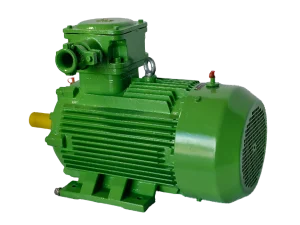
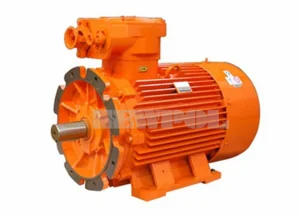
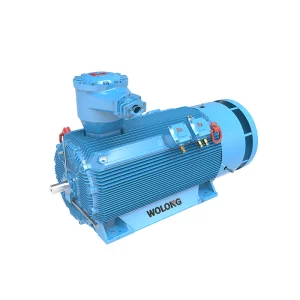
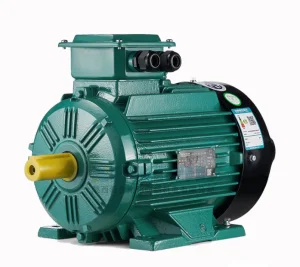
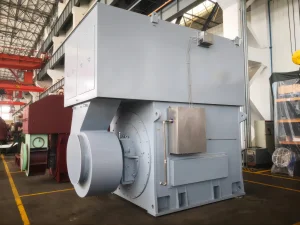
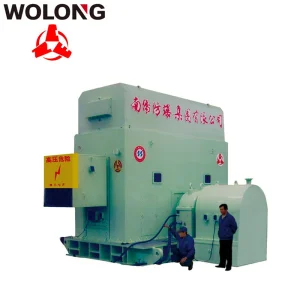
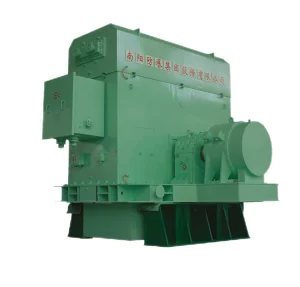
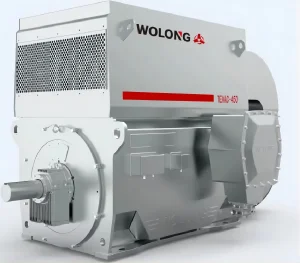
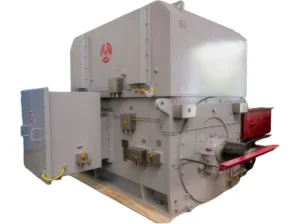
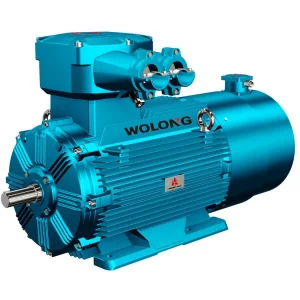
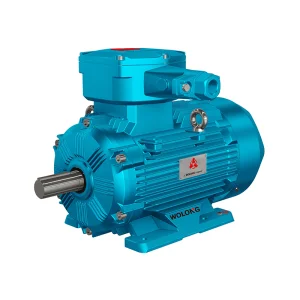
Explore our premium-grade low & high voltage explosion-proof motors certified for ATEX, IECEx, and global safety protocols.
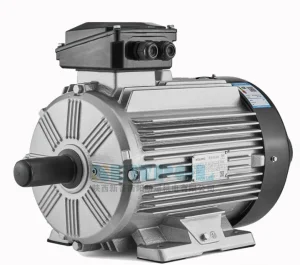
A comprehensive study on standard-compliant power transmission in hazardous environments, analyzing engineering architecture, localization capabilities, and global industrial integration.
In modern industrial processing, safety and performance efficiency represent two critical operational dynamics. Hazardous zones—environments loaded with flammable gases, volatile vapors, or combustible dust—demand robust power systems capable of containing internal electrical failures. The IEC (International Electrotechnical Commission) framework classifies these specialized areas, designing standards that define how electric motors operate securely without triggering explosive events.
Whether operating in chemical refineries, offshore drilling rigs, or coal mining facilities, high-performance explosion-proof motors act as critical safeguards. These motors feature robust design parameters, utilizing flameproof enclosures (Ex d), increased safety structures (Ex e), non-sparking configurations (Ex nA/Ex ec), or positive pressure ventilation (Ex p) to isolate potential sparks and surface temperatures from highly reactive ambient environments.
Shaanxi Nanfang Motor Technology Co., Ltd. is the authorized distributor of Wolong (Wolong Electric Drive Group Co., Ltd.), which was founded in 1984 and listed on the Shanghai Stock Exchange in 2002 (code SH600580). Over more than three decades of focused expansion, Wolong has established a powerful global presence, managing 3 key manufacturing bases, 39 advanced factories, and 3 state-of-the-art research and development centers.
Wolong's growth strategy relies heavily on international brand integration. By acquiring leading global manufacturing operations, the group has gathered extensive motor design expertise:
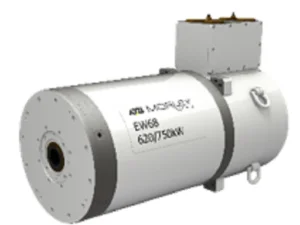
Wolong acquired 97.94% of the ATB Group, which includes Morley (renowned for mining machinery) and Laurence Scott (specialists in nuclear power application motors and military-grade marine systems).
The acquisition of Schorch (established in 1882) expanded Wolong's reach in gas compression, high-voltage offshore equipment, and petrochemical applications.
Nanyang Explosion-proof Group—China's largest research and production base for specialized hazardous area motors—fully integrated into Wolong, consolidating its R&D resources.
Integrating General Electric's industrial motor business enhanced Wolong's capabilities in heavy-duty design, NEMA compliance, and global industrial market penetration.
Explosion-proof motors must be engineered to withstand localized ambient parameters and specific mechanical configurations across demanding industries.
Refineries require continuous operation in atmospheres with constant hydrocarbon gases. The ATB and Schorch brands supply positive-pressure (Ex p) and flameproof (Ex d) motors to drive large centrifugal compressors, oil pumps, and cooling fans in extreme temperature Zones 1 and 2.
Environments with high concentrations of methane gas and combustible coal dust require heavy-duty safety designs. Using the legacy of Morley mining motors, our low-voltage mine motors provide reliable performance for continuous mining operations, conveyor drives, and underground ventilation systems.
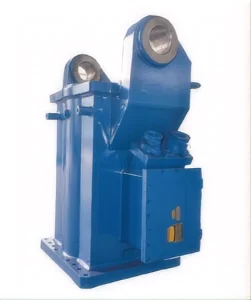
Tunnel Boring Machines (TBMs) work in confined spaces with unpredictable geology and potential explosive gas pockets. Flameproof motors, like the Wolong Nanyang YBU/YBUS/YBUD series, deliver the high torque and mechanical strength needed for TBM cutter heads under extreme load conditions.
Offshore drill rigs and marine vessels face both explosion risks and saltwater corrosion. Custom-engineered Laurence Scott generators and motors feature seawater-resistant cast shells, IP56/IP66 enclosure protection, and high insulation integrity to withstand offshore marine environments.
Operating from the Nanyang explosion-proof motor base in China, Wolong utilizes a highly integrated manufacturing supply chain. This concentration of raw material processing, copper drawing, stator winding, rotor casting, and digital machining ensures consistent product quality and predictable delivery timelines.
By sourcing raw materials like premium silicon steel sheets and high-purity copper directly from integrated local suppliers, we reduce material variance and minimize shipping lead times. Coupled with advanced automation, this integration allows us to offer cost-effective, high-quality OEM motor manufacturing on a global scale.
This manufacturing model combines domestic cost efficiency with European engineering standards (ATB, Schorch, Brook Crompton), creating a highly reliable source for IEC explosion-proof motors.

A detailed look at the core sub-assemblies of our IEC hazardous area motors, demonstrating the build quality required for explosive atmospheres.
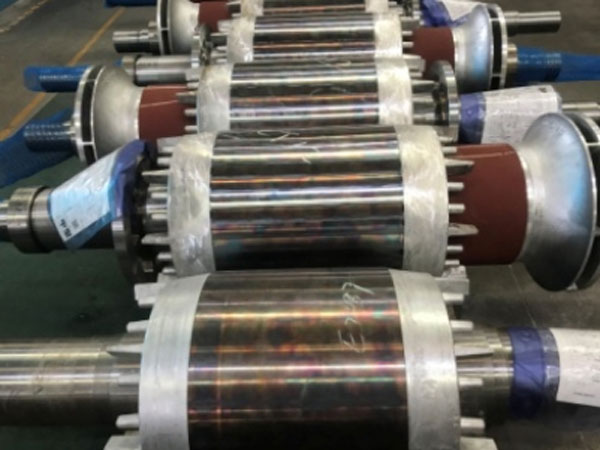
Our motor rotors utilize a robust squirrel-cage design. Most models feature cast aluminum rotors produced via centrifugal casting or high-pressure die-casting. This process forces molten pure aluminum into the rotor core slots, creating a single-piece component that integrates both rotor bars and end rings.
This integrated design provides high structural strength and reliable starting torque. For larger, heavy-duty applications, we construct copper bar rotors using specialized welding techniques to secure the bars and end rings, ensuring long-term balance and performance under high thermal stresses.
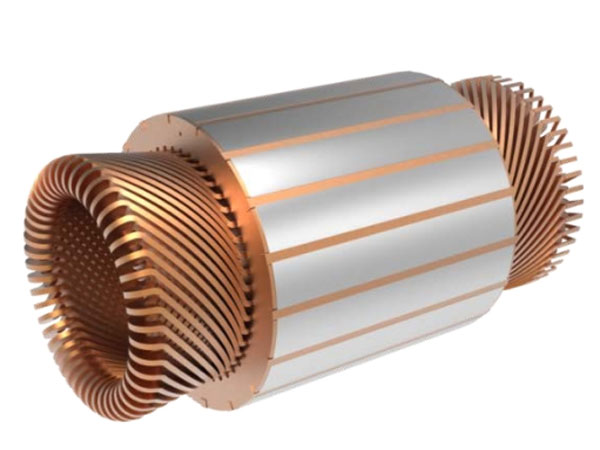
The stator coil is wrapped with high-purity polyester film, reinforced with glass cloth, and insulated using premium mica tape. The fully wound stator undergoes a specialized Vacuum Pressure Impregnation (VPI) process.
VPI forces insulation resin deep into the winding voids, creating a solid, moisture-resistant barrier. This treatment provides high electrical resistance, excellent heat dissipation, and the mechanical strength required to withstand severe vibration and voltage spikes.
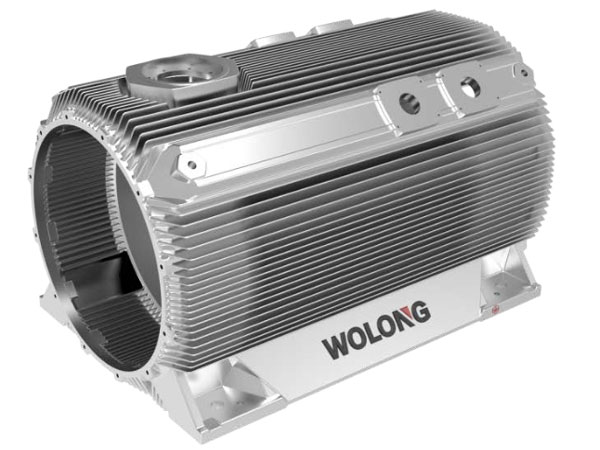
Our motor frames are designed using multi-physics structural and fluid dynamic simulations. This ensures the frame shape provides optimized heat dissipation and high structural integrity.
Cast from high-strength iron or fabricated from heavy-gauge steel, these frames feature thick outer walls designed to contain internal explosive pressures. They are built to absorb mechanical shocks, reduce vibration, and maintain structural alignment under heavy load conditions.
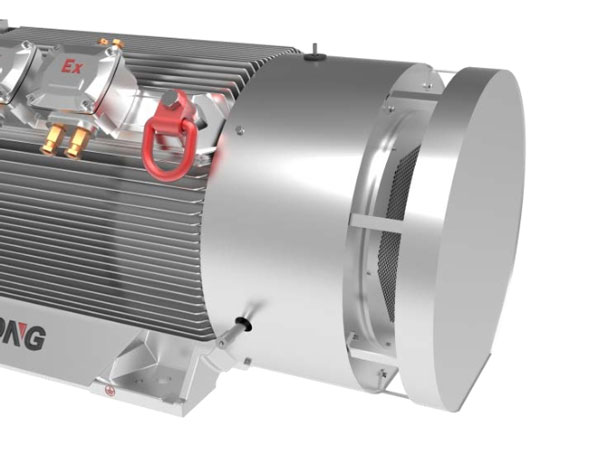
The cooling system includes an integrated fan cover, air guide cylinder, protective window, and internal sound-absorbing panels. The air intake is located on the side to prevent blockage from nearby equipment and minimize flow restriction.
By smoothing the airflow path and incorporating sound-dampening materials, this system significantly reduces acoustic noise. It is rated at IP22 to prevent accidental contact with the rotating fan blades while maintaining cooling performance.
Compliance with international explosion-proof standards is essential for industrial safety and cross-border trade.
To support global distribution, Wolong has obtained key product certifications, allowing our motors to meet diverse regional safety requirements:
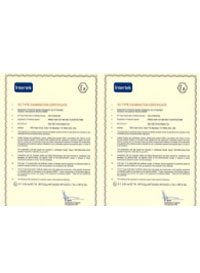
ATEX (Europe)
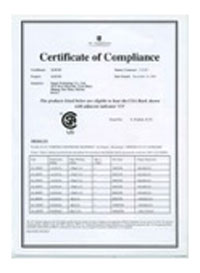
CSA (Canada/US)
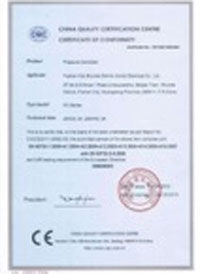
CE (Europe)
CCC (China)
SABS (South Africa)
TESTSAFE (Australia)
Our production facilities maintain ISO 9001 and ISO 80079-34 (Explosive Atmospheres Quality Systems) standards. Every step of production—from design verification to final electrical testing—is tracked to ensure safety compliance.
We provide full ATEX Directive 2014/34/EU and IECEx certification compliance. Our motors undergo rigorous testing, including flamepath dimension checks, thermal testing, and pressure containment verification, facilitating import into the European Union and other IECEx-regulated regions.
For markets utilizing North American standards, we manufacture motors that align with NEMA performance specifications. Our designs undergo testing for efficiency, insulation resistance, starting torque, and temperature rise, backed by UL and CSA safety marks.
By complying with the Testsafe standard, we provide certified coal mining motors suitable for the Australian market. This compliance simplifies the import process for specialized underground mining equipment.
The next generation of explosion-proof motors focuses on efficiency, digital monitoring, and material performance.
Industrial efficiency regulations continue to evolve. As energy costs rise, our engineering focus is shifting toward IE4 and IE5 efficiency ratings. We achieve this by optimizing rotor cage configurations, using low-loss silicon steel, and utilizing Permanent Magnet Synchronous Motor (PMSM) technology for hazardous area applications. These changes help reduce operational energy losses and lower the motor's running temperature, which is a key safety factor in explosive environments.
Modern facility operators rely on predictive maintenance to prevent unplanned downtime. We are integrating flameproof Ex-certified sensors directly into the motor assembly. These sensors monitor bearing temperature, stator winding temperatures, and frame vibration levels in real time. Using wireless mesh protocols (such as WirelessHART or ISA100), the motor feeds telemetry data to central control systems, helping operators address potential issues before they cause a breakdown.
Discover our specialized high-voltage, variable-frequency, and niche industrial application motors.
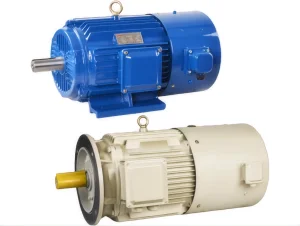
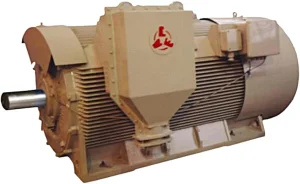
Find answers to common questions about selecting, certifying, and operating explosion-proof motors in hazardous industrial zones.
Ex d (Flameproof): The motor enclosure is designed to contain any internal explosion, preventing flames or hot gases from escaping into the surrounding hazardous area.
Ex e (Increased Safety): This design focuses on preventing internal electrical arcs, sparks, or hot spots through enhanced insulating materials, mechanical clearances, and safety features.
Ex p (Pressurized): The motor enclosure is pressurized with clean air or inert gas to maintain an internal pressure higher than the surrounding atmosphere, preventing flammable gases from entering.
ATEX is a European regulatory directive required for equipment sold within the EU. It includes both technical standards and conformity assessments based on European law.
IECEx is a global certification system based on international IEC standards. It is designed to facilitate international trade by aligning safety testing and certification across participating countries. Many countries accept IECEx test reports as a basis for local approvals.
VFDs can cause increased rotor heating and voltage spikes in electric motors. When using a VFD with an explosion-proof motor, the motor must be certified for VFD operation (e.g., our YBBP or BPY-S30 series). The motor and drive system should be tested together, or the motor must have integrated temperature monitoring (like RTDs) connected to the safety shutdown system to prevent the motor from exceeding its rated temperature class (T1-T6).
VPI removes air and moisture from the stator core windings using vacuum pressure, then applies insulating resin to seal the assembly. This process eliminates internal voids, securing the windings against movement and vibration. It also improves heat transfer and protects the electrical insulation from moisture and chemicals, which is crucial for long-term safety in hazardous environments.
Temperature classes define the maximum surface temperature the motor can reach under operating conditions. This temperature must remain below the ignition point of gases present in the environment:
- T1: ≤ 450°C
- T2: ≤ 300°C
- T3: ≤ 200°C
- T4: ≤ 135°C
- T5: ≤ 100°C
- T6: ≤ 85°C
Selecting the correct T-code is essential to ensure the motor surface temperature does not ignite ambient gases.
 NANFANG