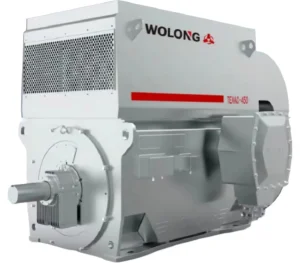
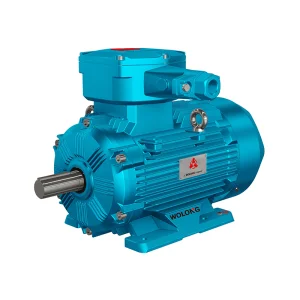
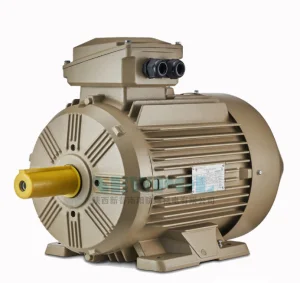
Engineered to support heavy industry, municipal waterworks, and energy grids across the Moscow Oblast and beyond.
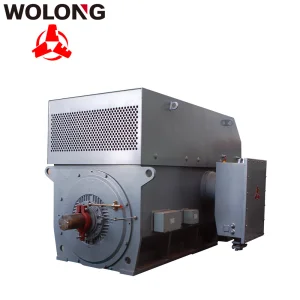
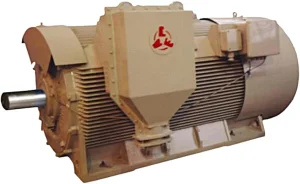
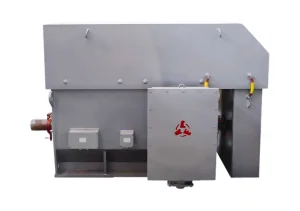
Understanding the technical demands of the Russian Federation's primary economic hub.
The Moscow metropolitan area, encompassing the city of Moscow and the surrounding Moscow Oblast, remains the primary industrial consumption engine of the Russian Federation. From municipal water purification stations managed by Mosvodokanal, to thermal cogeneration power plants managed by Mosenergo, and extensive pipeline installations feeding refineries in Kapotnya, high-power electric drives are critical to maintaining infrastructural stability.
Operating high-voltage electric motors (ranging from 3kV up to 10kV) in the Central Federal District requires consideration of specific environmental variables. Temperatures fluctuate from continental winter minimums of -30°C up to summer maximums of +35°C, demanding motor frames engineered with advanced structural steel or high-grade cast iron, paired with dynamic stator space heaters to prevent internal condensation during periods of inactivity. Furthermore, compliance with EAC (Eurasian Conformity) certificates under the Technical Regulations of the Customs Union (TR CU 012/2011 for explosion safety and TR CU 004/2011 for low voltage gear) is mandatory for any equipment bound for Russian industrial sectors.
As traditional supply chains from European heavy machinery factories undergo major structural re-alignment, Moscow industrial engineers, procurement agencies, and design institutes are actively seeking alternative partners. Shaanxi Nanfang Motor Technology Co., Ltd., as an authorized partner of Wolong Electric Drive Group, provides a reliable alternative: premium electrical engineering, robust manufacturing lines, and certified conformity to GOST-R standards to keep the pipelines, power grids, and chemical industries of Russia operating without interruption.
Efficiency optimization, digital twinning, and explosive-gas area compliance drive modern industrial motor purchasing decisions.
Global energy costs have forced heavy industrial complexes to prioritize operating expenditures (OPEX) over capital expenditures (CAPEX). High-efficiency motors, particularly permanent magnet designs (like our WEPM series) and optimized induction systems, decrease electricity draw in high-utilization environments like continuous water pump networks.
Modern process automation relies on combining high-voltage motors with advanced Variable Frequency Drives (VFDs). High-voltage motors must be engineered with reinforced insulation systems (such as customized VPI mica layering) and insulated bearings (e.g. non-conductive ceramic structures) to neutralize micro-discharges and harmonic voltage spikes.
Whether in coal mines, grain processing facilities, or chemical processing centers, explosive gas or dust environments require motors built to meet strict certification frameworks, including international IECEx, European ATEX, and Eurasian EAC Ex standards.
Combining automation, premium materials, and logistics integration to guarantee delivery timelines.
Shaanxi Nanfang Motor Technology Co., Ltd. serves as an authorized channel partner for Wolong Electric Drive Group Co., Ltd. founded in 1984. Wolong operates 39 advanced manufacturing facilities and 3 R&D centers globally. Shaanxi Nanfang Motor Tech delivers high-power electric drives to industrial centers in the Moscow market, leveraging automated manufacturing processes to ensure quality and speed of supply.
Our manufacturing centers employ automated winding arrays to maintain coil tension uniformity, robotic lamination assembly, and computerized Vacuum Pressure Impregnation (VPI) facilities that monitor curing profiles to ensure insulation void reduction. This combination of precision engineering and advanced automation enables us to maintain tight quality standards, reducing manual errors and production bottlenecks.
Furthermore, China's robust domestic supply chains for high-grade non-oriented silicon steel sheets, copper components, and permanent magnet raw materials protect our production schedules from global material shortages. Supported by direct rail freight corridors (such as the Xi'an-Moscow Express cargo network), we offer dependable transit times to Russian destinations, presenting a reliable alternative to European suppliers.
An analysis of our primary mechanical and electrical motor assemblies.
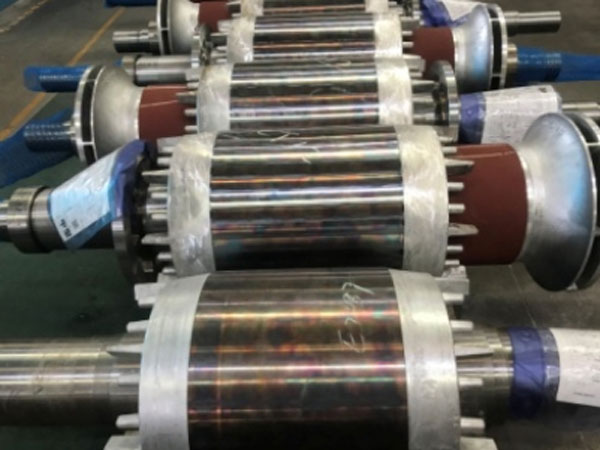
Our rotors utilize a high-rigidity squirrel cage construction. Cast aluminum rotors are produced using centrifugal aluminum casting or die-casting techniques, where molten pure aluminum is poured into the slots of the rotor core, creating a single-piece construction that integrates the rotor bars and end rings. This design provides structural integrity and reliable torque properties during high-current startups.
For larger-capacity motors, copper bar rotors are employed, featuring secure bar retention and end ring welding procedures. Additionally, protective ring designs on our high-speed motors help ensure stable operation of the copper bar rotor under heavy mechanical stress.
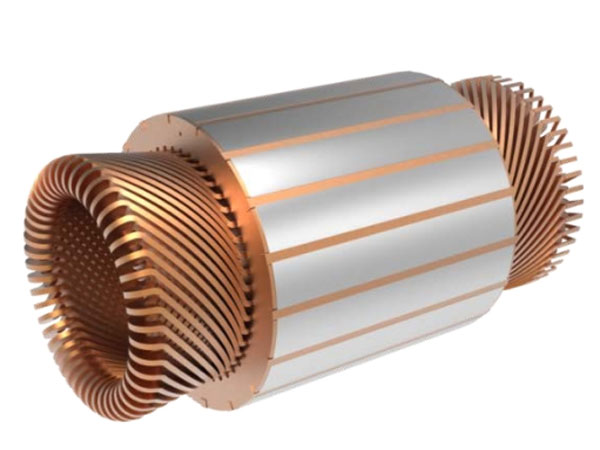
The stator coil is insulated with polyester film and reinforced with glass cloth, using low-powder mica tape with a high mica content or medium-powdered mica tape. Following the VPI (Vacuum Pressure Impregnation) process, the finished coil is cured to transform into a solid unit.
The winding and insulation are designed to provide electrical performance, mechanical strength, moisture resistance, and thermal stability under continuous operation. Class F (155°C) or Class H (180°C) thermal systems are standard, providing protective margins in high-load applications.
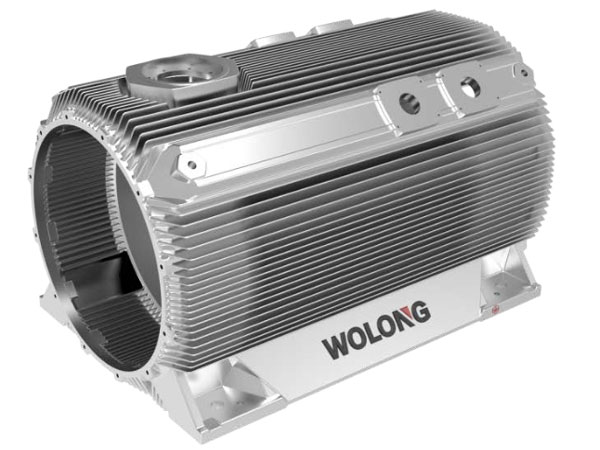
Our motor frames are engineered using a digital platform for structural and fluid multi-physics field simulations. This design uses high-strength cast iron (or steel as an alternative) to provide structural redundancy, heat dissipation properties, and inherent frequency isolation margins.
The frame is designed to endure mechanical shock, maintain a low vibration profile, and minimize motor temperature rise during operation. Standard mounting dimensions ensure direct compatibility with legacy Soviet and modern international installations.
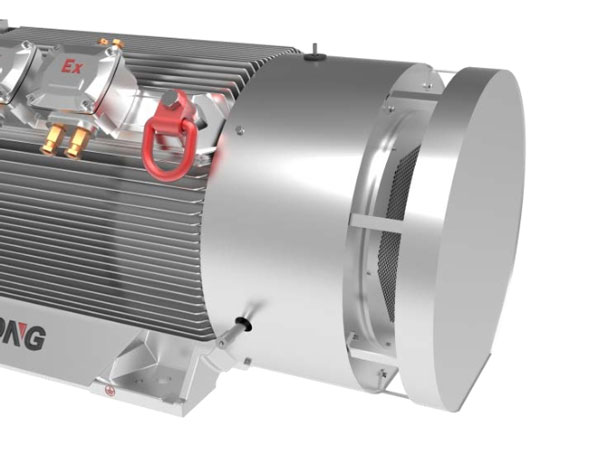
The low-noise fan cover system comprises a fan cover body, an air guide cylinder, a protective window, and a silencer plate. Its compact structure and lightweight design facilitate vibration reduction. The air inlet is situated on the side, which optimizes the avoidance of obstacles behind the motor, minimizing adverse effects on ventilation and reducing noise caused by energy loss during propagation path changes.
The system also incorporates sound-absorbing materials that absorb noise, lowering overall motor noise. Additionally, the fan cover is rated IP22, preventing physical contact with the rotating fan components.
Combining European engineering heritage with Chinese manufacturing scale.
In 2011, Wolong expanded its technical capabilities by acquiring a 97.94% stake in the Austrian ATB Group (ATB Motor), a leading European motor manufacturer. This acquisition integrated several long-standing brands into the Wolong portfolio, including Morley (specializing in underground coal mining equipment) and Laurence Scott (known for low starting current systems and custom military/nuclear generators).
The group later integrated Brook Crompton Motors, bringing over a century of experience in motor design and energy-efficient drive packages, and Schorch Electric Motor, established in 1882 and known for large-scale driving systems in oil, gas, and power generation. For vibration technology, Wolong partnered with the global brand OLI in China, and in 2018, acquired General Electric (GE) Industrial Motors, incorporating industrial drive engineering from the North American market.
This integration of international brands allows Shaanxi Nanfang Motor Tech to provide engineering, component interchangeability, and technical support across diverse industrial sectors.
European design heritage, specialized in oil and gas pumping installations, high-voltage chemical drives, and marine power plants.
Mining-grade explosion-proof motors and low starting current designs used in power stations and heavy military gear.
Standardized industrial drive packages, motor technology, and energy-efficient motor designs.
Tested and approved by international certification authorities.
Nemko/ATEX
CSA
CE
CC/CCC
SABS
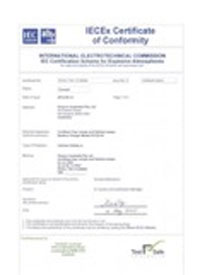
TESTSAFE
To support global supply chains, we maintain certification compliance across key international standards:
A range of explosion-proof, variable-frequency, and synchronous motors designed for Moscow industrial requirements.
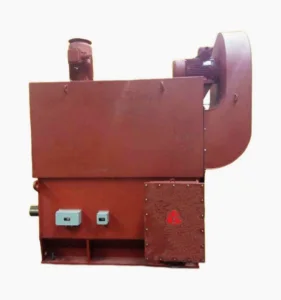
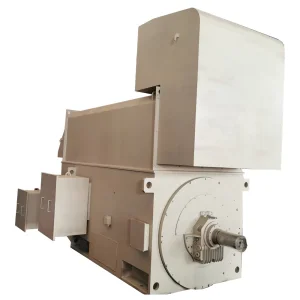
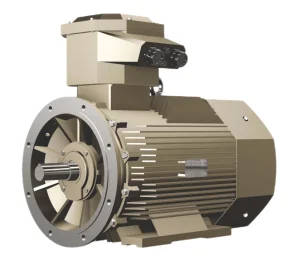
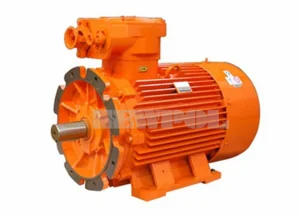
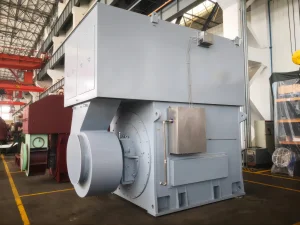
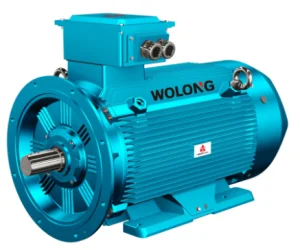
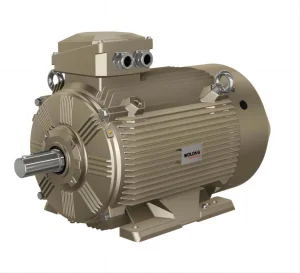
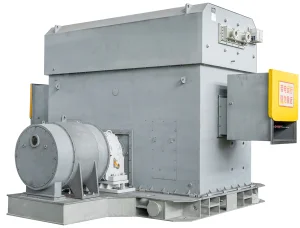
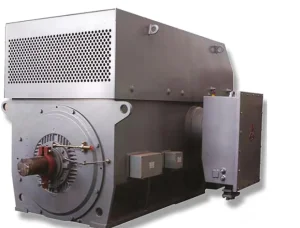
How our high-voltage drive portfolio supports critical local infrastructure and processes.
Industrial machinery deployed within the Russian Federation must function reliably across diverse applications:
Answers to engineering and logistics queries for high-voltage drive deployments in the Russian market.
Our VFD-compatible motors, such as the YVF and YZYKS series, utilize an insulation system featuring high-density mica tapes and solventless epoxy resins, cured through a computerized Vacuum Pressure Impregnation (VPI) process. To address high dv/dt voltage spikes from Variable Frequency Drives, we construct the slot isolation with reinforced inter-turn insulation. Additionally, we install insulated non-conductive bearings or grounding brushes to divert shaft currents, protecting the bearing raceways from electrical discharge erosion.
Yes. For cold-climate installations, we provide optional low-temperature construction upgrades, including low-temperature carbon steel or ductile iron frames, specialized bearing greases rated down to -40°C, and custom heating elements. Silicone-insulated space heaters are integrated within the stator winding cavity, activating automatically when the motor stops to prevent condensation on the winding surfaces. This configuration allows for safe cold starts without thermal shock risk.
The differences lie in the heat exchanger design and enclosure layout:
Yes. Our flameproof (Ex d), increased safety (Ex e), and positive-pressure (Ex p) motors are certified for Eurasian compliance, including the TR CU 012/2011 technical regulation for explosive environments. We supply full documentation (in Russian) to simplify integration and compliance reviews for chemical, petrochemical, and mining facilities across the Eurasian Economic Union.
Voltage fluctuations can cause stator heating and insulation breakdown. Our high-voltage windings are designed with a safety margin of ±10% voltage variation and ±2% frequency variation, in accordance with IEC standards. We construct the stator cores using low-loss silicon steel laminations to limit core losses during voltage spikes. Pt100 RTD sensors are embedded in both the stator windings and the bearings, providing real-time temperature data to trigger automatic shut-off systems if thermal limits are exceeded.
We coordinate logistics via the China-Europe railway corridor, routing cargo through border crossings like Alashankou or Manzhouli. The rail transit time from our terminal stations to major Moscow logistics centers (such as Vorsino) is typically 15 to 22 days. For oversized components or heavy high-voltage motors, we arrange flatcar rail transport or hydraulic low-boy truck transport to deliver directly to the project site.
Yes. We regularly supply replacements for aging Soviet-era motors. By matching legacy frame sizes, shaft heights, and mounting hole configurations, we configure our YKK, YKS, and YR motors to fit existing foundations. This allows for modernizing facilities without the cost of rebuilding concrete support structures.
Electric motors account for over 90% of a heavy industrial plant's energy consumption over their operational life. Upgrading from standard motors to IE4 or IE5 premium efficiency units reduces electricity use by 2% to 5% under full load. For a 1,000 kW high-voltage pump running 8,000 hours annually, this energy reduction translates to significant operating cost savings, often offseting the purchase price difference within the first 18 to 24 months of operation.
 NANFANG