Explore our certified explosion-proof, heavy-voltage, and marine propulsion motor configurations engineered for high-reliability operations.
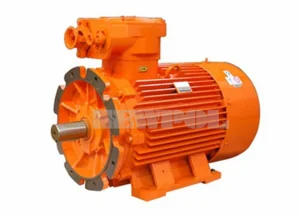
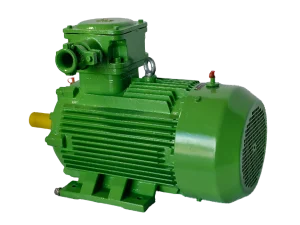
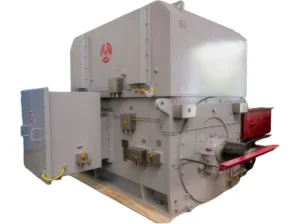
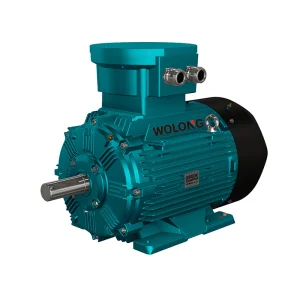
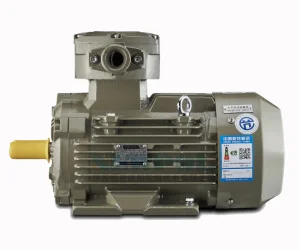
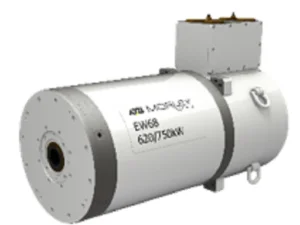
A technical dive into the thermodynamics, volumetric efficiency, and structural dynamics of premium liquid jacketed motor architectures.
Traditional air-cooled motors rely heavily on external convection, making them sensitive to ambient temperature spikes and dust accumulation. Our OEM liquid-cooled motors utilize custom jacket geometries (glycol-water or oil matrices) to yield up to 40% higher heat dissipation rates compared to conventional fan-cooled systems.
By eliminating the bulky cooling fan and external heat sinks, liquid-jacketed motors optimize spatial footprints. This design achieves an exceptional power-to-weight ratio, allowing engineers to pack high-torque outputs into tight compartments like subsea winches, mining shearers, and locomotive engines.
For operations prioritizing workplace safety or environmental comfort, the elimination of a high-speed axial cooling fan significantly cuts noise. Structural resonances are absorbed within the liquid coolant volume, resulting in quiet decibel ratings that align with rigorous occupational hazard standards.
In heavy industrial processing, thermal efficiency directly governs the lifespan of the motor's insulation system. For every 10°C increase above the rated thermal limit, insulation life cuts in half. Liquid cooling addresses this vulnerability by maintaining uniform temperatures across the stator coils and minimizing localized hot spots. As a premier authorized distributor of Wolong (comprising esteemed global brands like ATB, Brook Crompton, and Schorch), Shaanxi Nanfang Motor Technology Co., Ltd. provides customized stator jackets, dual-circulation cooling layouts, and highly resilient material interfaces designed specifically for demanding operating conditions.
Unifying a century of global engineering pedigree with world-class production scale and technological research hubs.
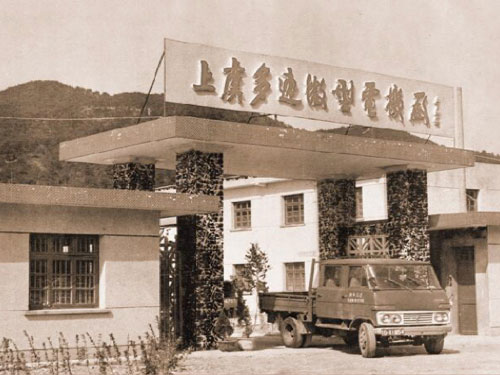
Shaanxi Nanfang Motor Technology Co., Ltd. is the premier authorized distributor of Wolong Electric Drive Group Co., Ltd. Founded in 1984 and listed on the Shanghai Stock Exchange in 2002 (code SH600580), Wolong has grown to establish 3 manufacturing bases, 39 factories, and 3 global R&D centers.
Wolong stands at the absolute vanguard of global motor technology. By prioritizing custom engineering solutions, heavy research investments, and an expansive global brand strategy, Wolong delivers cutting-edge drive systems to industrial operators in over 58 countries.
To secure top-tier technology and capture international markets, Wolong initiated a sequence of strategic global acquisitions. In 2011, Wolong acquired 97.94% of the Austrian ATB Group, integrating historical mining specialists Morley and high-torque nuclear engineering pioneers Laurence Scott.
In the following years, Brook Crompton (centennial innovators of energy-saving motors) and Schorch (German standard-setters for oil, gas, and marine systems established in 1882) joined the group. This expansion continued with joint ventures in OLI vibration motors, the integration of Nanyang Explosion-Proof Motor (CNE), and the landmark 2018 acquisition of General Electric's (GE) Industrial Motors business, consolidating a formidable global engineering alliance.
Inside the engineering blueprints: Stator coil technology, precision balanced rotor dynamics, and digital multi-physics frame design.
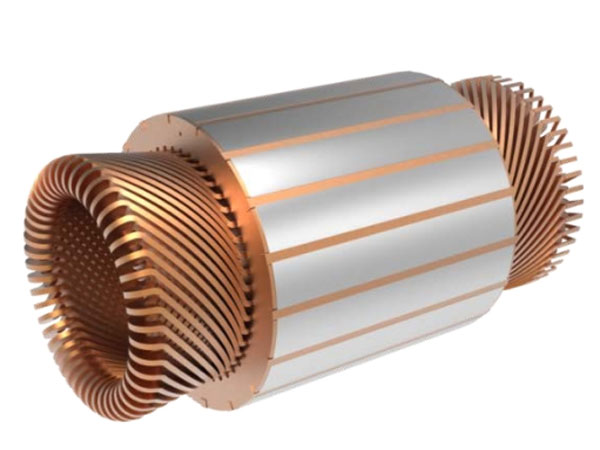
The stator winding lies at the core of electrical reliability. Coils are insulated using high-integrity polyester film reinforced with glass cloth, wrapped in premium low-to-medium-powder mica tape to withstand extreme voltage fluctuations and transient spikes.
The entire stator assembly undergoes Vacuum Pressure Impregnation (VPI). Under strict vacuum conditions, solventless resin is injected deep into the microscopic voids of the stator windings. The assembly is then baked to form a solid mechanical unit. This process yields superior dielectric strength, moisture resistance, and rapid thermal transfer to the external cooling jacket.
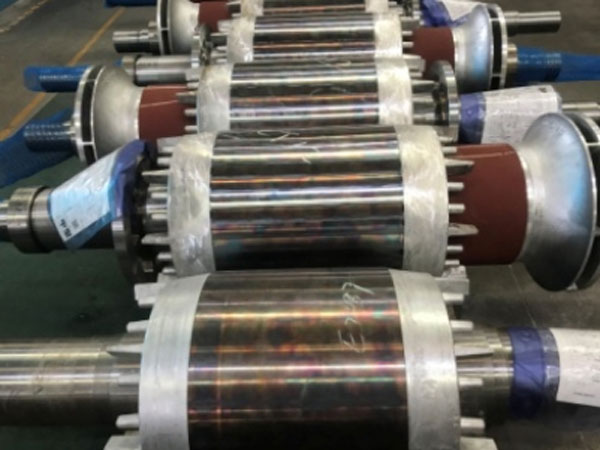
The rotor assembly features a rugged squirrel-cage layout. Medium-duty motors use high-grade cast aluminum rotors produced via advanced centrifugal casting or die-casting techniques. This structure integrates the rotor bars and end rings into a single piece, offering excellent starting torque characteristics and mechanical durability.
For heavy duty and high voltage systems, we utilize copper bar rotors. Copper bars are inserted into the rotor core slots and securely welded to the end rings via automated processes. Additionally, integrated protective containment rings are installed on high-speed configurations to prevent dynamic displacement under high centrifugal forces.
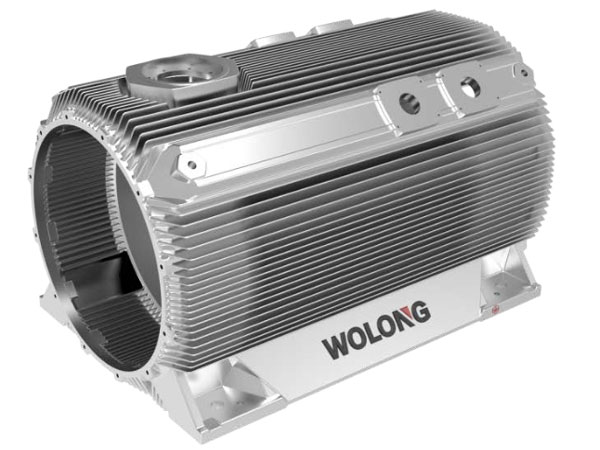
The motor enclosure is designed using digital multi-physics simulation platforms, integrating electromagnetic, structural, thermal, and fluid dynamics models. This analytical process optimizes housing geometry to ensure structural rigidity and fast heat dissipation.
Constructed from high-tensile cast iron or heavy welded steel, the frame provides robust structural margins. This robust design dampens severe mechanical impacts, isolates harmonic frequencies to minimize vibration, and ensures clean thermal pathways for internal heat transfer.
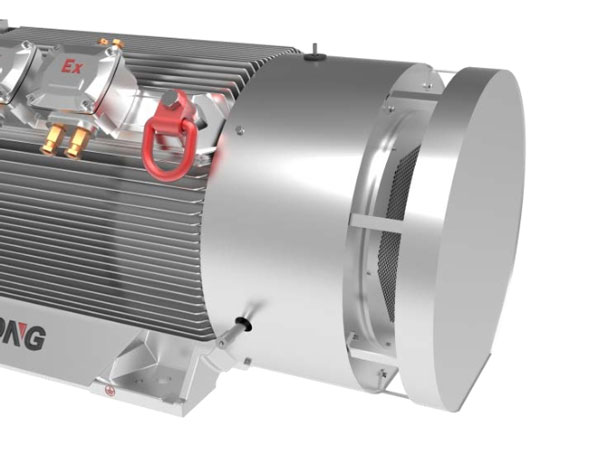
For air-cooled and hybrid-cooled motor configurations, our acoustic engineering team developed a specialized low-noise fan cover system. It integrates an aerodynamic guide cylinder, protective windows, and internal acoustic absorption baffles.
The side-inlet design diverts airflow away from back-end obstructions, minimizing intake turbulence and aerodynamic drag. Incorporating high-absorption acoustic liners, the assembly significantly dampens sound pressure waves. Rated at IP22, the fan hood prevents debris entry and contact with the high-speed fan blades.
How Shaanxi Nanfang Motor and Wolong coordinate material density, technological leadership, and local logistics to support global enterprises.
By producing components in-house—from raw copper wire drawing, electromagnetic steel stamping, and automated stator winding to multi-axis CNC rotor machining and final VPI curing—we maintain complete control over quality and minimize lead times.
Located near major metallurgical hubs in China, our manufacturing facilities source high-grade non-grain-oriented silicon steel sheets and premium high-purity copper directly. This raw material advantage minimizes pricing volatility and ensures consistent quality.
Backed by Wolong's global network of research institutes in China, Europe, and Japan, our design team translates custom customer requirements into production-ready blueprints within days, accelerating typical prototyping phases.
Our motors are certified under strict international testing frameworks, ensuring safe operation in hazardous and demanding environments.
Operating high-voltage electric motors in environments with combustible dust, flammable gases, or extreme moisture requires strict compliance. Wolong products hold certifications from top global testing bodies, including Nemko, ATEX, CSA, CE, CCC, SABS, and TestSafe.
Our adherence to ISO 9001 and ISO 14001 guidelines ensures clean manufacturing workflows. For North American markets, our motors comply with NEMA performance specifications, UL standards, and CSA certification. In European markets, our motors carry full ATEX Zone 1, Zone 2, Zone 21, and Zone 22 certifications.
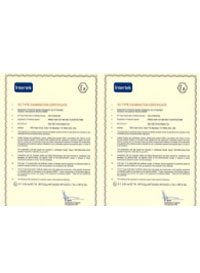
Nemko/ATEX
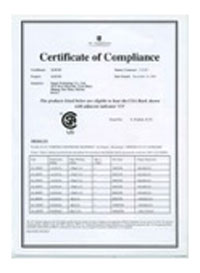
CSA
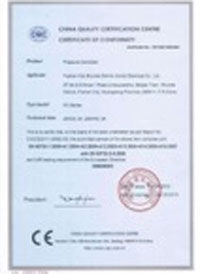
CE
CCC
SABS
TESTSAFE
Exploring how liquid-cooled and explosion-proof motors optimize operations across challenging industrial sectors.
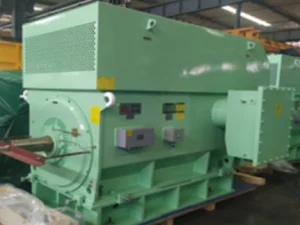
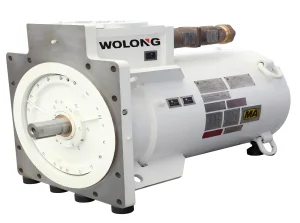
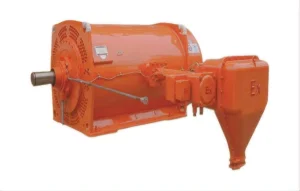
Underground coal shearers, conveyors, and mining pumps operate in confined, highly combustible zones containing methane and coal dust. Traditional air-cooled motors are prone to overheating in these environments and can draw coal dust into their enclosures. Liquid-jacketed explosion-proof motors (such as the YBK3 and YBC series) resolve this by sealing the motor shell and running liquid glycol circuits directly through the stator casing, containing thermal risks and eliminating dust entry.
Offshore platforms face high salt mist, relative humidity, and harsh wind conditions. Motors installed on deepwater drill rigs, mud pumps, and heavy deck winches are housed in sealed enclosures to prevent corrosion. Liquid cooling keeps these systems operating efficiently by removing heat through closed-loop liquid-to-air or liquid-to-water heat exchangers, maintaining stable operating temperatures regardless of ambient tropical or arctic conditions.
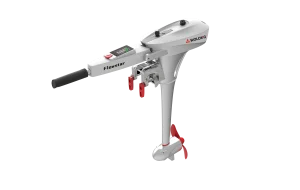
Marine electrification demands lightweight, high-density power delivery. In electric outboards (like our 40kW system), air cooling is insufficient due to compact enclosure sizes and lack of direct airflow. Liquid cooling utilizes the surrounding sea or lake water through a heat exchanger to cool the motor stator. This system keeps the motor compact, light, and running at peak continuous output without thermal throttling.
Answers to common engineering, integration, and maintenance questions from our global client base.
For most industrial applications, a mixture of 50% distilled water and 50% industrial ethylene glycol is recommended. The water provides high specific heat capacity, while the glycol prevents freezing in cold climates and provides corrosion protection. In specialized marine or high-temperature environments, synthetic silicon oils or direct dielectric fluids can be used.
The cooling jackets of our OEM motors are manufactured using corrosion-resistant materials, including marine-grade aluminum alloys, stainless steel (SUS316), or specialized protective interior coatings. Additionally, using coolants containing corrosion inhibitors prevents galvanic reactions and mineral scaling within the cooling channels.
Yes. Many of our liquid-cooled motors are certified under ATEX, IECEx, and CNE frameworks for hazardous environments. The closed-loop cooling system keeps surface temperatures well below the ignition threshold of surrounding gases, making these motors ideal for volatile petrochemical and mining operations.
Each motor size has a rated coolant flow rate and a maximum allowable pressure drop across the jacket. Our design team uses CFD modeling to optimize channel pathways, reducing fluid turbulence. This keeps pressure drops low, allowing standard industrial pumps to maintain the required flow rates.
Under normal operating conditions, the cooling channels require minimal maintenance. We recommend flushing the system and replacing the water-glycol mixture every 12 to 24 months, depending on usage intensity, to maintain anti-corrosive properties and prevent sediment buildup. Built-in pressure sensors can monitor flow rates to identify scaling issues early.
Retrofitting an existing air-cooled frame is generally not cost-effective due to the precise design requirements of the stator jacket and frame assembly. It is usually more practical to replace the motor with an OEM-engineered liquid-jacketed unit designed specifically for the application's physical space and thermal load.
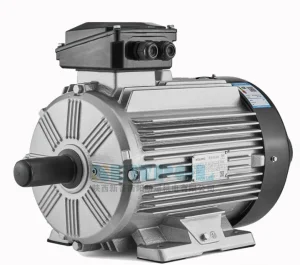
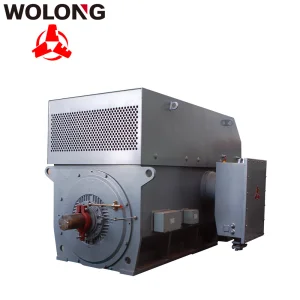
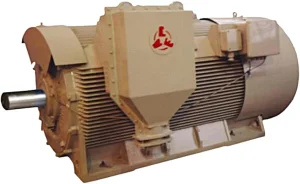
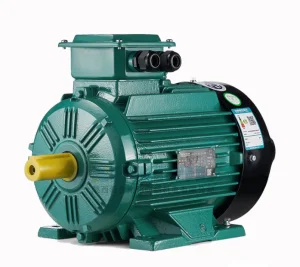
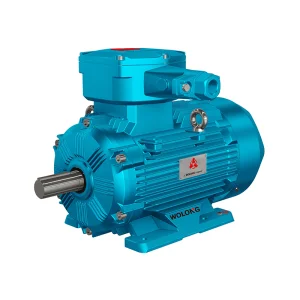
High-efficiency, dust-proof, and flameproof asynchronous motors engineered for heavy-duty conveyors, water pumps, and industrial fans.
 NANFANG